
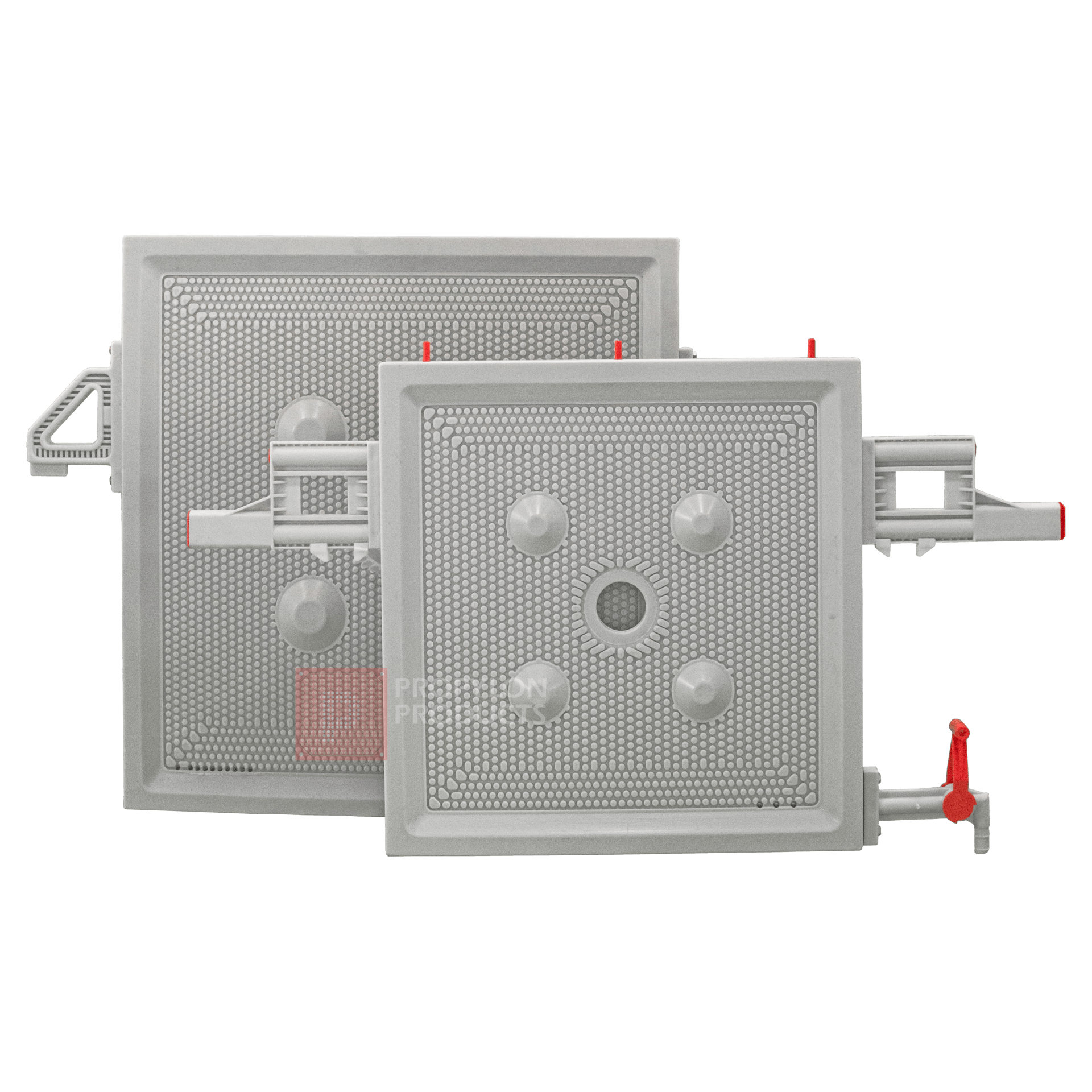
Many buyers discover this only after installation. The plates fit the machine, but performance does not meet expectations because critical specifications were overlooked during procurement.
Whether you are replacing existing plates or purchasing a complete set for a new filter press, understanding the most important technical specifications can help you make a better investment decision.
This Filter Press Plates Buying Guide explains the seven key factors every buyer should verify before placing an order.
Why Filter Plate Specifications Matter
Filter plates operate at the center of the filtration process. They form the chambers, support the filter cloth, withstand hydraulic pressure, and influence cake formation.
A small mismatch in specifications can affect:
- Filtration efficiency
- Cake dryness
- Cycle time
- Plate lifespan
- Maintenance requirements
- Operating costs
This is why a detailed review of specifications is essential before ordering replacement or new plates.
Specification #1: Plate Size and Compatibility
The first item in any Filter Press Plates Buying Guide is compatibility.
Even a high-quality plate becomes useless if it does not fit the filter press correctly.
Verify:
- Plate dimensions
- Center feed or corner feed design
- Handle type
- Plate thickness
- Suspension configuration
- Manufacturer specifications
Many facilities assume that plates with the same dimensions are interchangeable. In reality, small design differences can create installation and performance issues.
Always compare drawings and technical specifications before ordering.
Specification #2: Plate Material
The material used to manufacture the plate has a direct impact on durability and application suitability.
Most modern filter presses use polypropylene because it offers:
- Excellent chemical resistance
- Corrosion resistance
- Good mechanical strength
- Long service life
- Lightweight construction
However, different grades of polypropylene may be available depending on the application.
A proper Filter Press Plates Buying Guide should always emphasize matching material selection to the process conditions.
Consider:
- Chemical exposure
- Temperature range
- Abrasive wear
- Cleaning procedures
The right material can significantly extend plate life.
Specification #3: Plate Type and Design
Not all filter plates are designed the same way.
Common options include:
Recessed Chamber Plates
Suitable for general filtration and dewatering applications.
Membrane Filter Plates
Ideal when lower cake moisture is required.
CGR Plates
Designed for enhanced sealing and reduced leakage.
Plate and Frame Plates
Often used where cake washing is important.
Understanding the process requirements is critical when selecting the appropriate plate configuration.
Many purchasing decisions focus solely on price, but the wrong design can increase operating costs for years.
Specification #4: Filtration Pressure Rating
One of the most overlooked sections in a Filter Press Plates Buying Guide is pressure rating.
Every filter plate is designed to operate within specific pressure limits.
Before ordering, verify:
- Maximum filtration pressure
- Hydraulic closing pressure
- Membrane squeezing pressure (if applicable)
- Safety factors
Using plates that are not rated for the process pressure can lead to:
- Cracking
- Deformation
- Leakage
- Premature failure
Pressure compatibility should never be assumed.
Specification #5: Cake Thickness and Chamber Volume
Cake thickness directly affects filter press performance.
Different plate designs offer different chamber depths and filtration volumes.
Thicker chambers generally provide:
- More solids per cycle
- Higher throughput potential
However, they may also increase:
- Cycle time
- Cake moisture
- Discharge challenges
This is why the Filter Press Plates Buying Guide process should include a review of:
- Desired throughput
- Slurry characteristics
- Operating schedule
- Cake dryness requirements
Selecting the correct chamber depth helps optimize overall filtration performance.
Specification #6: Chemical and Temperature Resistance
Many buyers focus on mechanical specifications but overlook operating conditions.
Filter plates may be exposed to:
- Acids
- Alkalis
- Solvents
- Elevated temperatures
- Cleaning chemicals
Even high-quality plates can experience premature wear if these conditions are not considered.
Before purchasing, verify:
Chemical Compatibility
Ensure the plate material is compatible with:
- Process slurry
- Cleaning agents
- Sanitizing chemicals
Temperature Range
Confirm the plate can safely operate within the expected temperature limits.
This step is especially important in chemical, pharmaceutical, and mineral processing applications.
Specification #7: Sealing System and Leakage Prevention
Leakage between plates is one of the most common filtration problems.
The sealing system plays a major role in preventing it.
When evaluating filter plates, consider:
- Standard sealing surfaces
- CGR gasketed designs
- Gasket material compatibility
- Sealing geometry
A well-designed sealing system improves:
- Filtration efficiency
- Workplace cleanliness
- Product recovery
- Maintenance requirements
For many industries, investing in better sealing technology provides significant long-term benefits.
Real-World Example: The Cost of Overlooking Specifications
A mineral processing facility needed replacement plates for an aging filter press.
The purchasing team selected plates based primarily on dimensions and price. Initially, the plates appeared compatible.
Within months, the plant experienced:
- Increased leakage
- Faster wear around feed ports
- Reduced filtration efficiency
A later review revealed that the replacement plates were not designed for the abrasive slurry being processed.
After switching to plates with higher wear resistance and appropriate chamber design, performance improved significantly.
This example highlights why a comprehensive Filter Press Plates Buying Guide is valuable. The lowest purchase price is not always the most economical choice.
Questions to Ask Before Ordering Filter Plates
Before finalizing a purchase, consider asking suppliers:
- What material is used?
- What is the pressure rating?
- Is the plate compatible with my existing press?
- What temperature range is supported?
- Is the design suitable for my slurry?
- What maintenance requirements should I expect?
- Are spare parts readily available?
These questions often reveal important differences between similar-looking products.
How to Balance Cost and Performance
Every buyer wants value, but value should be measured over the life of the plate rather than at the time of purchase.
A higher-quality plate may provide:
- Longer service life
- Reduced downtime
- Better filtration performance
- Lower maintenance costs
When viewed from a lifecycle perspective, the more durable option often becomes the more economical choice.
This principle is central to any effective Filter Press Plates Buying Guide.
Common Buying Mistakes to Avoid
Several mistakes appear repeatedly across industries:
- Choosing based solely on price
- Ignoring pressure requirements
- Overlooking chemical compatibility
- Assuming all polypropylene plates are identical
- Failing to verify dimensions carefully
- Not considering future process changes
Avoiding these mistakes helps protect both equipment performance and investment value.
Final Thoughts
Filter Press Plates Buying Guide decisions should never be rushed. While filter plates may appear simple, they play a critical role in filtration efficiency, equipment reliability, and operating costs.
Before placing an order, carefully evaluate plate size, material, design, pressure rating, chamber volume, chemical resistance, and sealing performance. These seven specifications provide a strong foundation for selecting plates that will perform reliably in real operating conditions.
A thoughtful purchasing decision today can prevent years of maintenance problems, production interruptions, and unnecessary expenses. In filtration systems, the right plate is not simply a replacement component. It is a long-term investment in process performance