
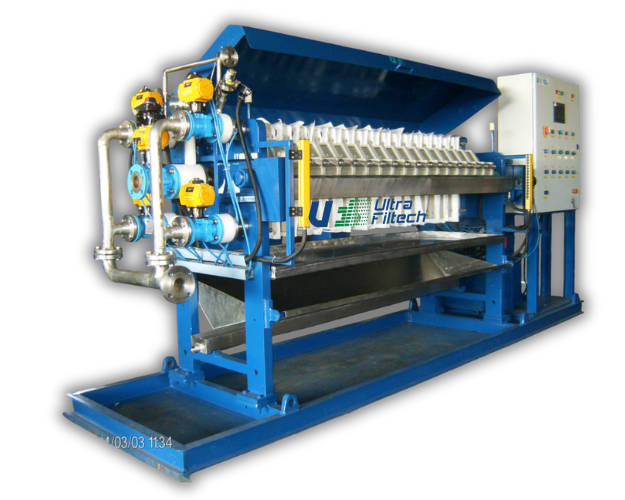
Fully Automatic Filter Press systems are advanced filtration machines designed to perform solid-liquid separation with minimal human intervention. These systems are widely used in industries where high efficiency, consistent output, and reduced labor dependency are essential. Understanding how a fully automatic filter press works helps industries select the right filtration solution.
What Is a Fully Automatic Filter Press?
A Fully Automatic Filter Press is a mechanically and electronically controlled filtration system that automates all major operations, including plate shifting, filtration, cake discharge, cloth washing, and cycle restart. It is ideal for large-scale and continuous industrial operations.
Main Components of a Fully Automatic Filter Press
The efficient working of a Fully Automatic Filter Press depends on its key components:
Filter plates and frames
Hydraulic closing system
Feed pump
Automatic plate shifter
PLC control panel
Filter cloth washing system
Each component works together to ensure smooth and efficient filtration.
Step-by-Step Working Process
1. Plate Closing
The Fully Automatic Filter Press starts by closing all filter plates using a hydraulic system. This creates sealed chambers for filtration.
2. Slurry Feeding
The slurry is pumped into the press under pressure. Solids are trapped on the filter cloth while liquid passes through as filtrate.
3. Filtration and Cake Formation
As pressure builds, solids accumulate inside the chambers forming a solid filter cake. This step ensures effective solid-liquid separation.
4. Filtration Completion
Once the chambers are full and pressure stabilizes, the feed pump stops automatically.
5. Automatic Cake Discharge
The Fully Automatic Filter Press opens plates one by one, allowing dry filter cakes to fall without manual effort.
6. Cloth Washing and Reset
Filter cloths are cleaned automatically, and the system resets for the next cycle.
Benefits of a Fully Automatic Filter Press
Using a Fully Automatic Filter Press offers several operational advantages:
Minimal manpower requirement
Consistent filtration quality
Faster cycle times
Improved safety
Lower operating costs in the long run
These benefits make it ideal for modern industrial plants.
Industries Using Fully Automatic Filter Press
A Fully Automatic Filter Press is commonly used in:
Chemical and pharmaceutical industries
Mining and mineral processing
Food and beverage processing
Effluent and wastewater treatment
Dyes and pigment manufacturing
Why Choose a Fully Automatic Filter Press?
Industries with high production volumes prefer a Fully Automatic Filter Press due to its automation, reliability, and ability to handle continuous operations efficiently. It ensures better productivity while maintaining environmental compliance.
Conclusion
A Fully Automatic Filter Press works through a well-coordinated automated process that ensures efficient filtration, reduced labor, and consistent output. Understanding its working principle helps industries make informed investment decisions and improve overall operational efficiency.
If your industry requires high-capacity and reliable filtration, a Fully Automatic Filter Press is the perfect solution.