
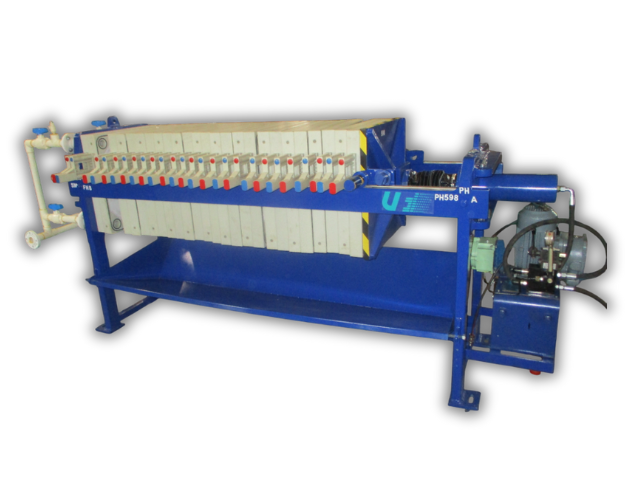
Filter Press is one of the most widely used machines for solid-liquid separation in industrial processes. From wastewater treatment to chemical processing and food production, this equipment plays a critical role in removing solids from liquid streams efficiently and reliably.
In this detailed guide, you will learn what a filter press is, how it works step by step, its main components, benefits, applications, and important factors to consider when using one.
What Is a Filter Press?
A Filter Press is a mechanical filtration device designed to separate solids from liquids using pressure. It consists of a series of plates covered with filter cloth that form chambers. When slurry is pumped into these chambers, liquid passes through the cloth while solids are retained, forming a solid cake.
The filter press is known for producing clear filtrate and relatively dry filter cake, making it suitable for many industrial filtration needs.
Main Components of a Filter Press
A Filter Press is built from several key components that work together to perform efficient filtration:
Filter plates and frames or recessed plates
Filter cloth
Hydraulic or mechanical closing system
Feed pump
Supporting structure and control system
Each component has a specific function, and proper coordination between them ensures consistent filtration performance.
How Does a Filter Press Work? Step-by-Step
The working principle of a Filter Press follows a simple but effective sequence of operations.
1. Plate Closing
The process starts with all filter plates being pressed together using a hydraulic or mechanical system. This creates sealed chambers between the plates where filtration will take place.
2. Slurry Feeding
Slurry is pumped into the chambers under pressure. The liquid part of the slurry passes through the filter cloth and exits as filtrate, while the solid particles are trapped inside the chambers.
3. Cake Formation
As more slurry enters, solids continue to accumulate on the cloth surface and build up into a filter cake. This cake itself becomes an additional filtration layer, improving separation efficiency.
4. Filtration Completion
Over time, the resistance through the cake increases and the flow rate decreases. When the desired pressure or flow condition is reached, the feed pump is stopped, marking the end of the filtration stage.
5. Plate Opening and Cake Discharge
The plates are opened, and the solid filter cake is discharged from each chamber. The filter press is then ready for the next cycle.
Why Filter Press Is So Effective
A Filter Press is effective because it uses pressure to force liquid through a filtering medium while retaining solids. This method allows high solids capture, clear filtrate quality, and relatively low moisture content in the cake compared to many other filtration technologies.
The batch-wise operation also makes it easy to control filtration conditions and adapt the process to different types of slurry.
Types of Filter Press
Depending on the level of automation and design, a Filter Press can be classified into:
Manual filter press
Semi-automatic filter press
Fully automatic filter press
Membrane filter press
Each type serves different production scales and process requirements, but the basic working principle remains the same.
Industries That Use Filter Press
A Filter Press is widely used in many industries, including:
Wastewater and effluent treatment
Chemical and petrochemical processing
Pharmaceuticals and fine chemicals
Food and beverage production
Mining and mineral processing
Dyes, pigments, and paints
Its versatility makes it one of the most trusted filtration systems in industrial applications.
Benefits of Using a Filter Press
Using a Filter Press offers several practical advantages:
High solid-liquid separation efficiency
Clear filtrate quality
Relatively dry filter cake
Simple and robust construction
Long equipment life with proper maintenance
Flexible operation for different slurries
These benefits explain why filter presses are still widely used despite the availability of newer filtration technologies.
Important Factors to Consider When Using a Filter Press
To get the best performance from a Filter Press, it is important to consider:
Slurry characteristics and solid content
Required filtration capacity
Desired cake moisture level
Cycle time and operating hours
Plate type and size
Maintenance and cleaning requirements
Proper selection and operation ensure stable performance and lower operating cost.
Common Mistakes in Filter Press Operation
Some common mistakes include:
Oversizing or undersizing the equipment
Ignoring cycle time in capacity calculations
Using incorrect filter cloth material
Applying excessive pressure without benefit
Poor cleaning and maintenance practices
Avoiding these mistakes helps maintain consistent efficiency and longer service life.
Conclusion
Filter Press technology remains one of the most reliable and efficient solutions for solid-liquid separation. By understanding what a filter press is and how it works, industries can make better decisions about equipment selection, operation, and optimization.
Whether used in wastewater treatment, chemical processing, or food production, a well-designed and properly operated filter press delivers consistent performance, lower operating cost, and dependable filtration results. If your process requires effective separation of solids from liquids, a Filter Press is a proven and practical solution.