
In these industries, the filter press is often one of the final process stages before a product reaches storage, packaging, or further refinement. Any contamination introduced during filtration can affect product quality, regulatory compliance, and consumer safety.
This is one of the reasons polypropylene filter plates have become the preferred choice for food and pharmaceutical filtration systems worldwide. Their unique combination of chemical stability, hygienic properties, and durability makes them ideally suited for applications where cleanliness matters as much as filtration performance.
Understanding why polypropylene is trusted in these industries helps explain why it has become the standard material for modern food-grade filtration systems.
Why Material Selection Is Critical in Food and Pharma
In mining or wastewater treatment, filtration equipment primarily focuses on separating solids and liquids efficiently.
Food and pharmaceutical processing introduces a different challenge.
Equipment must:
- Prevent contamination
- Maintain product purity
- Resist cleaning chemicals
- Meet hygiene standards
- Support frequent sanitation procedures
A material that performs well mechanically may still be unsuitable if it can contaminate the product or deteriorate during cleaning.
This is why Food Grade Filter Plates require careful material selection.
What Makes a Filter Plate Food Grade?
The term “food grade” refers to materials that are safe for direct or indirect contact with food products.
A food-grade filter plate should:
- Be non-toxic
- Resist chemical interaction with products
- Prevent contamination
- Be easy to clean
- Maintain structural integrity during operation
For pharmaceutical applications, the requirements are often even more demanding.
Product purity, traceability, and hygienic design become essential factors.
Polypropylene meets many of these requirements exceptionally well.
Why Polypropylene Is Widely Used
Polypropylene has become the most common material used for Food Grade Filter Plates because it combines safety, durability, and practical performance.
Unlike some materials that require coatings or surface treatments, polypropylene naturally offers properties that support hygienic processing environments.
This makes it suitable for both food and pharmaceutical applications.
Non-Toxic and Chemically Stable
One of the most important characteristics of polypropylene is its chemical stability.
When used correctly, it does not react with most food products, pharmaceutical ingredients, or process liquids.
This means:
- No product contamination
- No unwanted chemical reactions
- Consistent product quality
- Reliable process performance
For manufacturers, this stability is one of the primary reasons Food Grade Filter Plates are commonly manufactured from polypropylene.
Excellent Resistance to Cleaning Chemicals
Food and pharmaceutical plants routinely perform cleaning and sanitation procedures.
Equipment may be exposed to:
- Hot water
- Cleaning detergents
- Caustic solutions
- Sanitizing chemicals
- CIP (Clean-in-Place) systems
Polypropylene offers excellent resistance to many of these cleaning agents.
This helps maintain the integrity of Food Grade Filter Plates even after repeated cleaning cycles.
Long-term durability under sanitation conditions is a major advantage in highly regulated industries.
Smooth Surface Reduces Contamination Risk
Surface quality plays a significant role in hygienic processing.
Rough or damaged surfaces can trap:
- Product residue
- Microorganisms
- Cleaning chemicals
- Fine particles
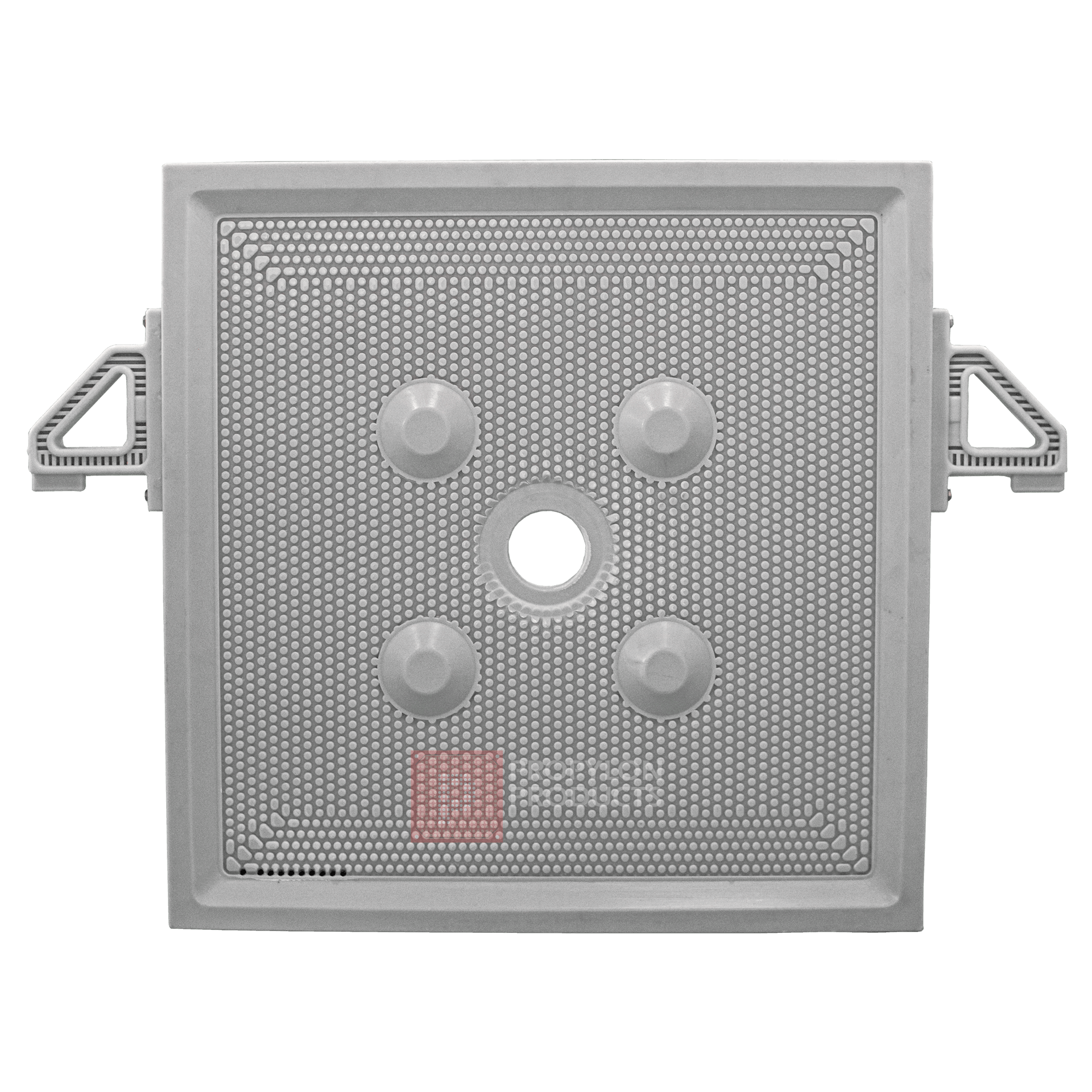
Polypropylene filter plates are manufactured with smooth surfaces that help minimize product retention.
This improves:
- Cleaning efficiency
- Hygiene control
- Product safety
For facilities focused on contamination prevention, this characteristic is particularly valuable.
Low Moisture Absorption Supports Hygiene
Another reason polypropylene is used in Food Grade Filter Plates is its low moisture absorption.
Materials that absorb water can create environments where contamination becomes more difficult to control.
Polypropylene resists moisture absorption, helping maintain:
- Dimensional stability
- Surface cleanliness
- Long-term durability
This property is especially important in applications involving frequent washing and sanitation.
Resistance to Corrosion and Product Interaction
Metal components can sometimes corrode when exposed to certain food ingredients or cleaning chemicals.
Corrosion not only damages equipment but can also introduce contaminants into the process.
Polypropylene avoids this issue because it naturally resists corrosion.
This makes Food Grade Filter Plates suitable for applications involving:
- Fruit processing
- Sugar production
- Edible oils
- Pharmaceutical intermediates
- Fermentation processes
The material remains stable throughout repeated operating cycles.
Supporting Regulatory Compliance
Food and pharmaceutical manufacturers operate under strict quality and safety regulations.
Although compliance requirements vary by region and application, equipment materials often play a key role in meeting regulatory expectations.
Polypropylene is widely accepted because it supports:
- Hygienic operation
- Product purity
- Easy cleaning
- Consistent performance
This widespread acceptance contributes to the popularity of Food Grade Filter Plates across regulated industries.
Real-World Applications of Food Grade Filter Plates
Food and pharmaceutical facilities use filter presses in a wide range of processes.
Examples include:
Food Industry
- Sugar syrup clarification
- Edible oil filtration
- Beverage processing
- Starch manufacturing
- Gelatin production
Pharmaceutical Industry
- API production
- Fermentation filtration
- Chemical intermediate processing
- Biotechnology applications
- Fine chemical manufacturing
In all of these cases, maintaining product quality is essential.
The filtration equipment must support that goal without introducing risk.
Real-World Example: Improving Hygiene Standards
A food processing facility producing liquid sweeteners experienced recurring cleaning challenges with older filtration equipment.
Product residue occasionally accumulated in difficult-to-clean areas, increasing cleaning time and inspection requirements.
After upgrading to modern polypropylene Food Grade Filter Plates, the facility achieved:
- Faster cleaning cycles
- Improved hygiene control
- Reduced maintenance requirements
- Greater confidence during quality audits
The filtration process remained unchanged, but the material upgrade improved overall operational efficiency.
Factors to Consider When Selecting Food Grade Filter Plates
Not all filtration applications have the same requirements.
When evaluating Food Grade Filter Plates, consider:
Product Characteristics
Understand:
- Viscosity
- Solids content
- Chemical composition
- Temperature
Cleaning Procedures
Review:
- Cleaning frequency
- Sanitizing methods
- CIP requirements
- Chemical exposure
Regulatory Requirements
Consider:
- Industry standards
- Product specifications
- Quality assurance requirements
Filtration Performance
Evaluate:
- Cake formation
- Throughput requirements
- Product recovery goals
The best results come from balancing hygiene and filtration efficiency.
Common Mistakes to Avoid
Several mistakes can compromise filtration performance in food and pharmaceutical applications.
These include:
- Prioritizing cost over hygiene
- Ignoring cleaning requirements
- Using incompatible materials
- Overlooking surface condition
- Delaying plate replacement when damaged
A proactive approach helps maintain both product quality and operational reliability.
Final Thoughts
Food Grade Filter Plates are far more than simple filtration components. They are a critical part of maintaining product safety, regulatory compliance, and process reliability in food and pharmaceutical manufacturing.
Polypropylene has become the material of choice because it combines non-toxic properties, chemical stability, corrosion resistance, smooth hygienic surfaces, and long-term durability. These characteristics make it ideally suited for environments where contamination control is essential.
When properly selected and maintained, food-grade polypropylene filter plates help manufacturers achieve consistent filtration performance while protecting the quality of the products that ultimately reach consumers and patients.
In industries where trust and safety are everything, that reliability is invaluable.