
Choosing the right system depends on production volume, manpower availability, budget, and process requirements. This guide explains the differences in depth so you can make an informed decision.
What Is a Fully Automatic Filter Press?
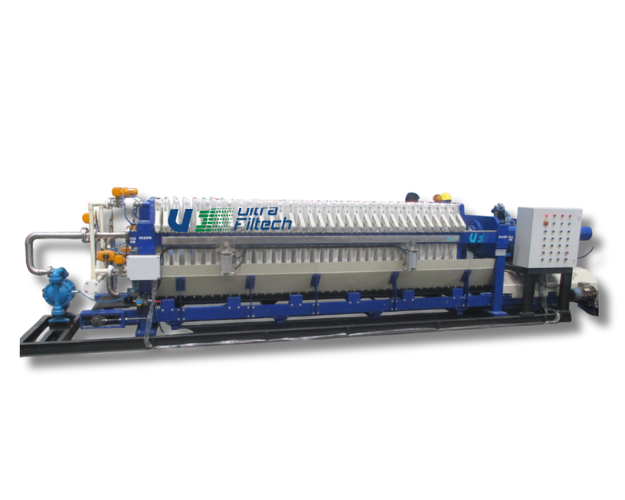
A fully automatic filter press is a system that automates almost every step of the filtration cycle. It includes hydraulic plate closing, automatic plate shifting, cake discharge, and often cloth washing. The entire process is controlled through a PLC-based system.In the Fully Automatic vs Semi Automatic Filter Press comparison, the fully automatic system is designed for high-volume production with minimal operator involvement.
What Is a Semi Automatic Filter Press?
A semi automatic filter press uses hydraulic pressure for plate closing and opening, but cake discharge and some operational steps are performed manually. It reduces physical effort compared to manual presses but does not eliminate labor completely.
In the Fully Automatic vs Semi Automatic Filter Press evaluation, the semi automatic option is typically chosen for medium-scale operations seeking balance between cost and efficiency.
Key Differences: Fully Automatic vs Semi Automatic Filter Press
1. Level of Automation
The main difference in Fully Automatic vs Semi Automatic Filter Press lies in automation. Fully automatic systems control plate shifting and cake discharge automatically. Semi automatic systems require manual cake removal.
2. Labor Requirement
Fully automatic systems significantly reduce manpower needs. Semi automatic systems still require operators for cake discharge and monitoring.
3. Production Capacity
In the Fully Automatic vs Semi Automatic Filter Press comparison, fully automatic presses offer higher throughput due to faster and more consistent cycles. Semi automatic presses are suitable for moderate production volumes.
4. Initial Investment
Fully automatic systems have higher capital cost because of advanced automation and control systems. Semi automatic presses are more economical upfront.
5. Operating Cost
Although initial cost is higher, fully automatic systems often have lower long-term operating cost due to reduced labor and optimized cycle time.
Cycle Time and Efficiency Comparison
Cycle time plays a major role in the Fully Automatic vs Semi Automatic Filter Press decision. Fully automatic presses optimize each step, reducing idle time and increasing daily output. Semi automatic presses depend more on operator speed and handling, which may vary from shift to shift.
Consistent cycle time improves productivity and lowers cost per ton of solids processed.
Maintenance and Reliability
Semi automatic systems have fewer moving parts and simpler control systems, making maintenance relatively straightforward. Fully automatic systems include additional components such as sensors, plate shifters, and automation panels, which require skilled maintenance.
In the Fully Automatic vs Semi Automatic Filter Press comparison, maintenance capability and technical support availability should be carefully evaluated.
Energy and Operational Efficiency
Fully automatic presses are programmed to avoid unnecessary running time, ensuring efficient use of pumps and hydraulics. Semi automatic systems may run longer due to manual handling delays.
Over time, the optimized performance of a fully automatic system can result in lower energy consumption per unit of output.
Safety and Working Conditions
Safety is another important factor in the Fully Automatic vs Semi Automatic Filter Press comparison. Fully automatic presses reduce manual contact with moving plates and filter cake, lowering risk of workplace injuries. Semi automatic presses still involve manual cake handling.
Improved safety can reduce accident-related downtime and liability.
Which One Should You Choose?
Choose Fully Automatic Filter Press If:
-
Production volume is high
-
Plant operates multiple shifts
-
Labor cost is significant
-
Consistent performance is critical
-
Long-term operational savings are a priority
Choose Semi Automatic Filter Press If:
-
Production volume is moderate
-
Budget is limited
-
Labor is readily available
-
Full automation is not necessary
The right decision in the Fully Automatic vs Semi Automatic Filter Press comparison depends on your plant’s operational goals and financial planning.
Common Mistakes When Comparing Systems
Many buyers focus only on purchase price and ignore long-term operational cost. In the Fully Automatic vs Semi Automatic Filter Press evaluation, it is important to calculate total cost of ownership, including labor, energy, maintenance, downtime, and future expansion needs.
Conclusion
Fully Automatic vs Semi Automatic Filter Press is not about which system is universally better, but which one fits your production requirements and cost strategy. Fully automatic systems offer higher productivity, lower labor dependency, and better long-term efficiency. Semi automatic systems provide a cost-effective solution for moderate production needs.
By analyzing your throughput requirements, manpower availability, and long-term growth plans, you can select the filtration system that delivers the best balance between investment and operational performance.