
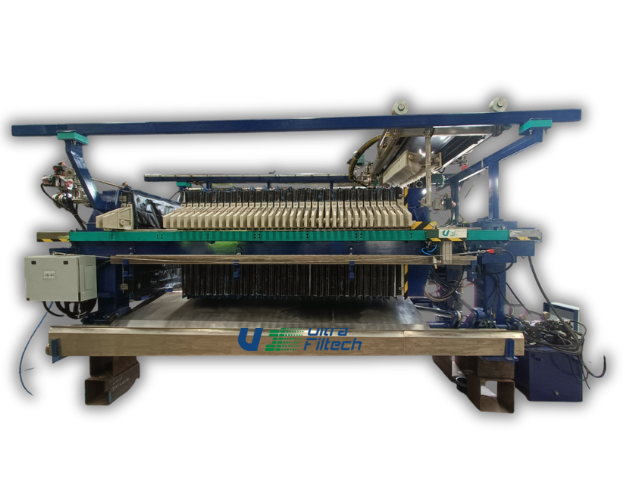
In this guide, we will explain how an automatic filter press saves operational cost across different areas of plant operation and why it is a smart long-term investment.
Why Operational Cost Matters More Than Purchase Price
When companies compare filtration systems, they often focus on initial investment. However, operational cost usually exceeds capital cost over the equipment’s lifetime. Labor, electricity, consumables, maintenance, and production losses due to downtime add up year after year.
An Automatic Filter Press is designed to optimize these recurring expenses through automation, process consistency, and better resource utilization.
1. Reduced Labor Cost Through Automation
One of the biggest ways an Automatic Filter Press saves money is by reducing manpower requirements. In manual or semi-automatic systems, operators must handle plate opening, cake discharge, and sometimes cloth cleaning. These tasks are time-consuming and labor-intensive.
With automation:
-
Plate opening and closing is automatic
-
Cake discharge happens without manual effort
-
Cycle restart is automatic
-
Operator involvement is minimal
This reduces the number of operators needed per shift and lowers long-term labor cost significantly.
2. Faster Cycle Time Increases Productivity
An Automatic Filter Press runs with consistent and optimized cycle times. Automated control ensures:
-
Faster plate shifting
-
Timely start and stop of feeding
-
Optimized filtration and discharge sequence
Shorter cycle times mean more batches per day with the same equipment. Higher throughput reduces cost per ton of solids processed and improves overall plant economics.
3. Lower Energy Consumption Per Unit of Output
Although an Automatic Filter Press uses motors, hydraulics, and control systems, it often consumes less energy per unit of production compared to manual systems. This is because:
-
Cycles are optimized and not extended unnecessarily
-
Pumps and hydraulics run only when required
-
Filtration and discharge stages are precisely controlled
By avoiding over-running equipment, the automatic filter press reduces wasted power and lowers electricity bills over time.
4. Reduced Maintenance and Wear Costs
In manual systems, uneven plate closing, improper handling, and inconsistent operation cause higher mechanical stress on plates, cloths, and frames. An Automatic Filter Press applies uniform and controlled pressure every cycle, which results in:
-
Less damage to plates and frames
-
Longer filter cloth life
-
Fewer unexpected breakdowns
-
Lower spare parts consumption
Over the years, this reduction in wear and tear translates into significant maintenance cost savings.
5. Lower Downtime Means Lower Hidden Cost
Unplanned downtime is one of the most expensive problems in any plant. An Automatic Filter Press reduces downtime by:
-
Running consistent and repeatable cycles
-
Reducing operator errors
-
Allowing preventive maintenance scheduling
-
Providing stable and predictable performance
More uptime means more production and better utilization of installed capacity, which directly improves profitability.
6. Better Cake Dryness Reduces Disposal and Handling Cost
Many automatic systems are combined with advanced features such as optimized pressure control or membrane squeezing. This helps produce drier filter cake. With an Automatic Filter Press, drier cake means:
-
Lower transportation cost
-
Lower disposal cost
-
Easier handling and storage
-
Less reprocessing or re-drying required
Even small reductions in cake moisture can lead to large savings in waste management expenses.
7. Improved Process Consistency Reduces Rework
Manual operations often lead to variations in cycle time, pressure, and cake quality. An Automatic Filter Press operates with programmed parameters, ensuring:
-
Consistent filtration quality
-
Predictable cycle performance
-
Reduced risk of off-spec output
-
Less need for reprocessing
This process stability reduces hidden costs related to quality issues and rework.
8. Better Use of Plant Operating Hours
Because an Automatic Filter Press can run with minimal supervision, it is easier to operate during night shifts or extended hours. This improves equipment utilization without proportionally increasing labor cost, effectively lowering the cost per ton of production.
9. Long-Term Return on Investment
While the initial investment in an Automatic Filter Press is higher than manual systems, the savings in labor, energy, maintenance, downtime, and waste handling quickly compensate for the difference. Over the equipment’s lifetime, the total cost of ownership is usually much lower.
In many plants, the payback period comes from:
-
Labor savings alone, or
-
A combination of labor, energy, and disposal cost reductions
Common Mistakes When Evaluating Cost Savings
Some buyers make the mistake of:
-
Comparing only purchase price
-
Ignoring labor and downtime cost
-
Underestimating maintenance and spare part expenses
-
Not calculating cost per ton of solids processed
To truly understand the value of an Automatic Filter Press, the evaluation must be based on total operating cost, not just initial investment.
Conclusion
Automatic Filter Press systems are not just about convenience or modern technology. They are powerful cost-saving tools that reduce labor expenses, improve productivity, lower energy use, minimize maintenance, and cut waste handling costs. While the upfront cost is higher, the long-term operational savings make them a financially smart choice for medium to large-scale filtration operations.
If your goal is to reduce filtration cost per unit, improve reliability, and increase plant efficiency, investing in an Automatic Filter Press is one of the most effective decisions you can make.