
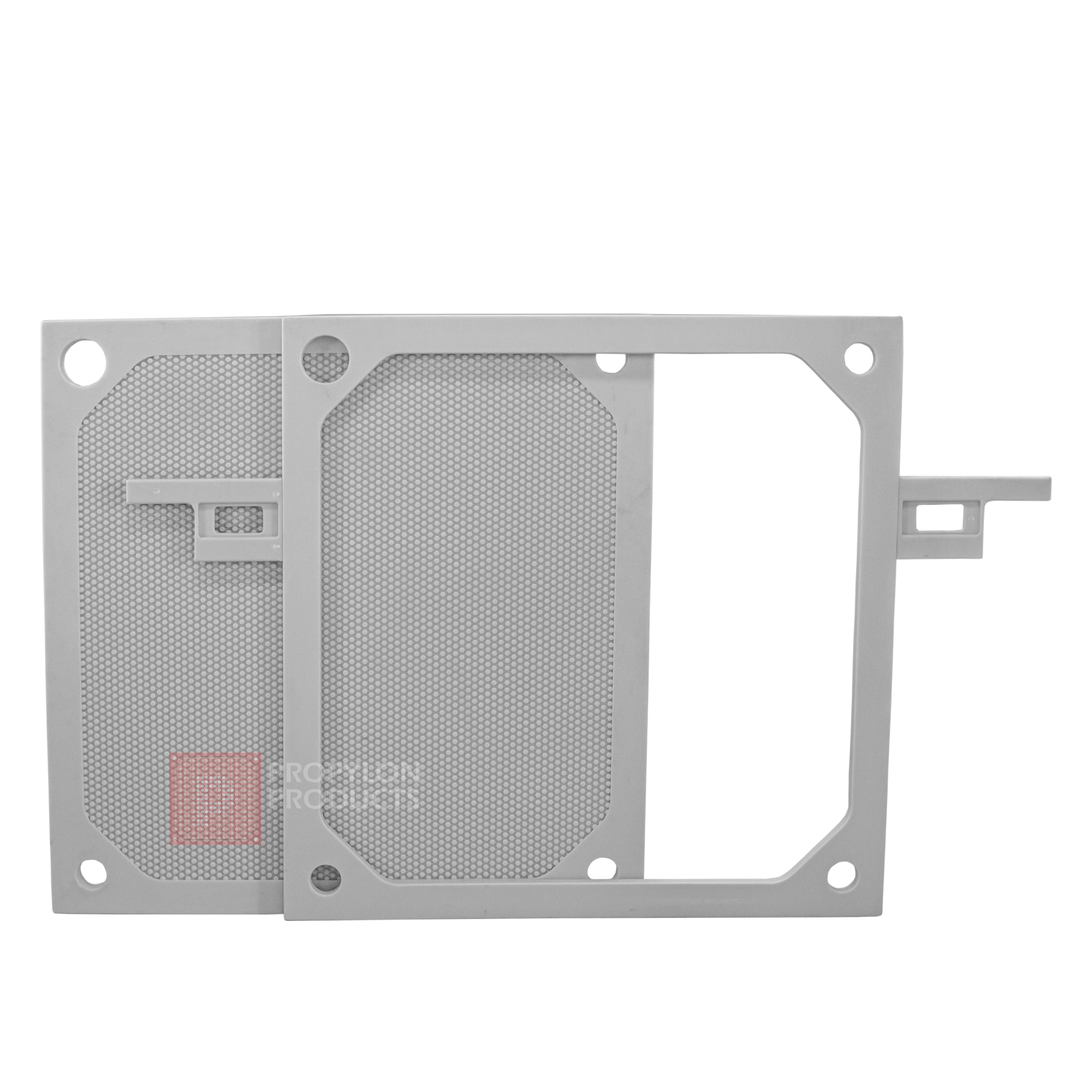
What makes this issue frustrating is that filter plates are designed to handle pressure and repeated cycles. So when they crack, the immediate reaction is often to blame material quality.
In reality, plate failure is rarely caused by a single factor. It is usually the result of operating conditions, handling practices, and small process issues that build up over time.
The good news is that most causes are predictable. And once you understand them, preventing plate damage becomes much easier.
Why Plate Cracking Is a Serious Problem
When a plate cracks, it does more than just interrupt one filtration cycle.
It can lead to:
- Sudden leakage during operation
- Loss of filtration pressure
- Damage to adjacent plates
- Production downtime
- Safety concerns in high-pressure systems
This is why addressing Filter Press Plate Cracking is not just about replacing parts. It is about protecting the entire filtration process.
Cause 1: Uneven Pressure Distribution
One of the most common reasons for Filter Press Plate Cracking is uneven pressure across the plate surface.
Filter presses are designed to apply uniform pressure. But when that balance is disturbed, certain areas of the plate experience higher stress than others.
This can happen due to:
- Misaligned plates
- Improper closing of the plate pack
- Foreign particles stuck between plates
- Uneven slurry filling
Over time, repeated uneven loading weakens the plate structure and eventually leads to cracking.
Prevention
Regularly check plate alignment before operation. Ensure no debris is trapped between plates. Confirm that the hydraulic system is applying even pressure across the entire stack.
Cause 2: Overpressure or Sudden Pressure Spikes
Filter plates are designed for a specific pressure range. Exceeding that range, even occasionally, can damage the plate.
Pressure spikes often occur when:
- Feed pumps are not properly controlled
- Valves are opened or closed too quickly
- Blockages create sudden resistance
- Operators push the system beyond recommended limits
In many cases, Filter Press Plate Cracking begins with repeated exposure to pressure levels slightly above the design limit.
Prevention
Use proper pressure control systems and monitor feed pressure closely. Avoid sudden changes in flow or pressure during operation.
Cause 3: Incorrect Plate Handling
Filter plates may look strong, but they can be damaged by improper handling, especially during installation, cleaning, or maintenance.
Dropping a plate, hitting it against hard surfaces, or dragging it across rough ground can create micro-cracks that are not immediately visible.
Later, under pressure, these small defects grow into full cracks.
This is one of the most underestimated causes of Filter Press Plate Cracking, because the damage does not show up right away.
Prevention
Handle plates carefully at all times. Use proper lifting methods and avoid impact. Store plates in a clean and stable environment.
Cause 4: Chemical Degradation
In many industrial applications, plates are exposed to aggressive chemicals. While materials like polypropylene are resistant to many substances, they are not completely immune to all chemical conditions.
Over time, exposure to incompatible chemicals can weaken the plate material, making it more prone to cracking under pressure.
This is a slower form of Filter Press Plate Cracking, but it can be just as damaging.
Prevention
Verify material compatibility with your slurry and process chemicals. If conditions change, reassess whether the plate material is still suitable.
Cause 5: Thermal Stress and Temperature Variation
Temperature changes can also affect plate integrity.
If plates are exposed to high temperatures beyond their design limits, or if there are rapid temperature fluctuations, the material may expand and contract unevenly.
This creates internal stress that can lead to cracking over time.
In some processes, this becomes a hidden contributor to Filter Press Plate Cracking, especially when temperature is not closely monitored.
Prevention
Ensure operating temperatures remain within recommended limits. Avoid sudden temperature changes during operation or cleaning.
Cause 6: Worn or Damaged Filter Cloth
At first, filter cloth may not seem related to plate damage. But in practice, it plays an important role.
A damaged or uneven cloth can lead to:
- Uneven cake formation
- Localized pressure points
- Improper chamber filling
These conditions create stress concentrations on the plate surface.
Over time, this contributes to Filter Press Plate Cracking, especially in high-cycle operations.
Prevention
Inspect cloths regularly and replace them when worn or damaged. Ensure proper installation and alignment.
Cause 7: Blocked Filtrate Outlets
If filtrate channels or outlet ports are blocked, pressure inside the chamber can build unevenly.
This creates internal stress that the plate is not designed to handle.
Blocked outlets are a less obvious cause of Filter Press Plate Cracking, but they can lead to sudden and unexpected failures.
Prevention
Keep filtrate channels clean and inspect outlets regularly. Ensure free flow of liquid during filtration.
Real-World Example: Small Issue, Major Failure
In one plant, a filter press begins showing minor leakage near one plate. Operators continue running the system without inspection.
Over time, the leakage worsens, and eventually the plate cracks completely during operation.
After inspection, the root causes are identified:
- Slight plate misalignment
- Worn filter cloth
- Partial blockage in filtrate outlet
None of these issues alone seemed critical, but together they caused plate failure.
This is a common pattern in Filter Press Plate Cracking. It is rarely one big mistake. It is usually several small ones.
How to Prevent Plate Cracking in the Long Term
Preventing plate damage requires a combination of good operation and regular inspection.
A practical approach includes:
Daily Checks
- Plate alignment
- Leakage observation
- Cloth condition
Weekly Checks
- Filtrate outlet cleaning
- Pressure monitoring
- Plate surface inspection
Monthly Checks
- Hydraulic system performance
- Detailed plate inspection
- Replacement of worn components
Consistency in these checks is one of the most effective ways to reduce Filter Press Plate Cracking.
Final Thoughts
Filter Press Plate Cracking is not an unavoidable problem. It is usually the result of operating conditions, handling practices, and maintenance gaps that can be identified and corrected.
When plates are used within their limits, handled properly, and supported by a stable process, they can last for a long time without failure.
The key is to treat plate health as part of the overall filtration process, not just as a component issue.
In most cases, preventing plate cracking does not require major changes. It requires attention to detail, consistency in operation, and a willingness to address small issues before they grow into larger ones.
And in industrial filtration, that approach always pays off.