
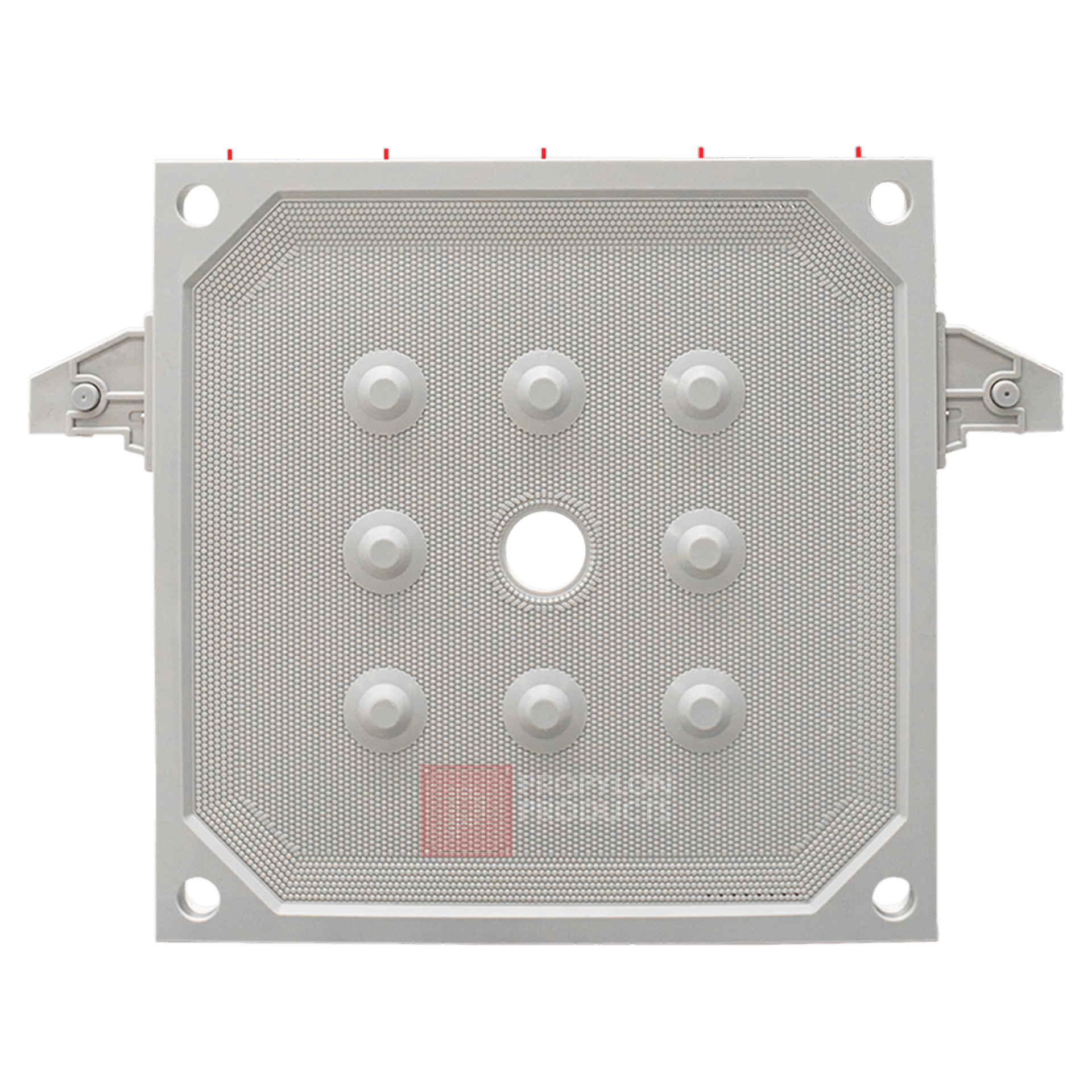
How to Clean Filter Press Plates is a question that every filter press operator should understand, yet it is often overlooked until performance starts to decline. A filter press can be perfectly designed and properly sized, but if the plates are not cleaned correctly, filtration efficiency gradually drops, leakage becomes more common, and component life shortens.
Many plants focus heavily on maintaining pumps, hydraulics, and filter cloths while assuming the plates will continue performing without much attention. In reality, filter plates are exposed to slurry, pressure, abrasive particles, chemicals, and repeated operating cycles every day. Without proper cleaning, deposits build up and begin affecting the entire filtration process.
The challenge is finding the balance between effective cleaning and avoiding damage. Aggressive cleaning methods may remove buildup quickly, but they can also shorten the life of expensive filter plates.
Understanding the correct approach helps maintain performance while protecting your investment.
Why Clean Filter Press Plates Matter
Before discussing cleaning methods, it is important to understand why plate cleanliness is so critical.
Dirty plates can lead to:
- Leakage between plates
- Poor cake formation
- Longer filtration cycles
- Uneven pressure distribution
- Reduced filtrate quality
- Premature cloth wear
Even small accumulations of slurry residue can create operational issues that become increasingly difficult to diagnose.
This is why knowing How to Clean Filter Press Plates properly should be considered part of routine preventive maintenance rather than an occasional repair task.
What Causes Buildup on Filter Plates?
Filter press plates operate in harsh conditions. Over time, solids accumulate in areas that are difficult to see during normal operation.
Common sources of buildup include:
- Fine particle deposits
- Hardened sludge
- Chemical residues
- Scaling from process water
- Product crystallization
- Residual cake material
The type of buildup depends on the process, but the effect is usually the same. Filtration becomes less efficient and sealing performance begins to suffer.
Understanding the source of contamination helps determine the safest cleaning method.
Start With a Visual Inspection
The first step in How to Clean Filter Press Plates correctly is understanding what needs to be cleaned.
Before using water, brushes, or cleaning solutions, inspect:
- Plate surfaces
- Feed eyes
- Filtrate ports
- Sealing surfaces
- Cloth support areas
A careful inspection often reveals whether the contamination is light, moderate, or severe.
This prevents unnecessary cleaning that could expose plates to additional wear.
Remove Loose Residue First
One of the biggest mistakes operators make is immediately reaching for high-pressure cleaning equipment.
Instead, begin by removing loose solids manually.
Use:
- Soft plastic scrapers
- Non-metallic cleaning tools
- Soft brushes
Avoid metal scrapers whenever possible.
Although they may seem effective, metal tools can scratch polypropylene surfaces and create long-term sealing problems.
A gentle approach is often the safest first step when learning How to Clean Filter Press Plates without causing damage.
Use Water Cleaning Carefully
For many applications, water alone is sufficient to remove most residue.
Low to moderate pressure rinsing can effectively clean:
- Plate surfaces
- Filtrate channels
- Feed ports
- Drainage pathways
However, pressure matters.
Excessively high-pressure washing can damage:
- Plate surfaces
- Gasket seating areas
- Filter cloth supports
- Membrane plate components
A controlled rinse is usually more effective than aggressive blasting.
Understanding High-Pressure Washing Risks
High-pressure cleaning systems are commonly used in industrial plants, but they should be used carefully around filter plates.
When operators ignore proper technique, they can unintentionally create:
- Surface erosion
- Small cracks
- Seal damage
- Plate deformation
This is especially important for polypropylene plates.
Knowing How to Clean Filter Press Plates safely means recognizing that more pressure is not always better.
If pressure washing is required, follow manufacturer recommendations regarding distance, pressure settings, and spray angle.
Cleaning Sealing Surfaces Correctly
Sealing surfaces are among the most important areas on any filter plate.
Even small deposits can prevent proper plate-to-plate contact and cause leakage during filtration.
When cleaning sealing areas:
- Use soft brushes
- Remove dried solids carefully
- Avoid scratching the surface
- Inspect for wear during cleaning
Many recurring leakage issues are actually cleanliness problems rather than mechanical failures.
Proper attention to sealing surfaces is one of the most valuable aspects of How to Clean Filter Press Plates effectively.
When Chemical Cleaning Is Necessary
Some residues cannot be removed using water alone.
Examples include:
- Mineral scale
- Chemical deposits
- Crystallized product buildup
- Sticky process residues
In these situations, chemical cleaning may be required.
However, chemical compatibility is critical.
Before using any cleaning solution:
- Verify compatibility with polypropylene
- Confirm compatibility with gaskets
- Review manufacturer recommendations
- Test on a small area if necessary
Improper chemical selection can damage plates faster than the contamination itself.
Pay Attention to Filtrate Ports and Feed Eyes
Many cleaning routines focus only on visible surfaces.
Unfortunately, some of the most serious restrictions occur inside:
- Feed ports
- Filtrate outlets
- Drainage channels
These areas can gradually accumulate deposits without obvious external signs.
When learning How to Clean Filter Press Plates, operators should make these internal passages part of every inspection and cleaning routine.
Maintaining clear flow paths helps prevent pressure imbalances and improves overall filtration efficiency.
Cleaning Membrane Filter Plates Requires Extra Care
Membrane plates require additional attention during cleaning.
Unlike standard recessed chamber plates, membrane plates contain flexible internal components designed to expand during squeezing cycles.
Aggressive cleaning can damage:
- Membrane surfaces
- Inflation channels
- Sealing interfaces
For this reason, membrane plates should always be cleaned using approved methods and recommended pressure levels.
Careful handling protects both performance and longevity.
Real-World Example: Cleaning Solved a Performance Problem
A chemical processing facility experienced increasing cycle times and recurring leakage between several plates.
Initially, operators suspected worn filter cloths or hydraulic pressure issues.
After a detailed inspection, the actual problem was discovered:
- Dried slurry buildup on sealing surfaces
- Partial blockage in filtrate ports
- Hardened residue around feed eyes
After a thorough cleaning program was implemented, filtration performance returned to normal without replacing any major components.
This example highlights how understanding How to Clean Filter Press Plates properly can solve problems that appear much more serious than they actually are.
Recommended Cleaning Schedule
Consistency is often more important than aggressive cleaning.
Daily Cleaning
- Remove loose cake residue
- Inspect sealing surfaces
- Check feed ports for blockage
Weekly Cleaning
- Rinse plate surfaces thoroughly
- Inspect filtrate channels
- Check for developing buildup
Monthly Cleaning
- Perform detailed inspection
- Clean internal passages
- Review plate condition
- Evaluate chemical deposits
A structured cleaning schedule prevents small issues from becoming major maintenance problems.
Common Cleaning Mistakes to Avoid
Several cleaning practices can shorten plate life significantly.
Avoid:
- Using metal scrapers
- Excessive pressure washing
- Harsh incompatible chemicals
- Striking plates during cleaning
- Ignoring filtrate ports
- Delaying removal of hardened deposits
These mistakes often create more damage than the contamination itself.
Final Thoughts
How to Clean Filter Press Plates properly is not about cleaning harder. It is about cleaning smarter.
A well-maintained filter plate delivers better sealing, more efficient filtration, improved cake formation, and longer service life. The key is using methods that remove buildup without introducing unnecessary wear or damage.
By combining regular inspections, gentle cleaning techniques, proper chemical selection, and consistent maintenance practices, operators can significantly improve filtration performance while extending the life of their filter press plates.
In most cases, the best cleaning strategy is not the most aggressive one. It is the one that preserves the equipment while keeping the filtration process running at its best.