
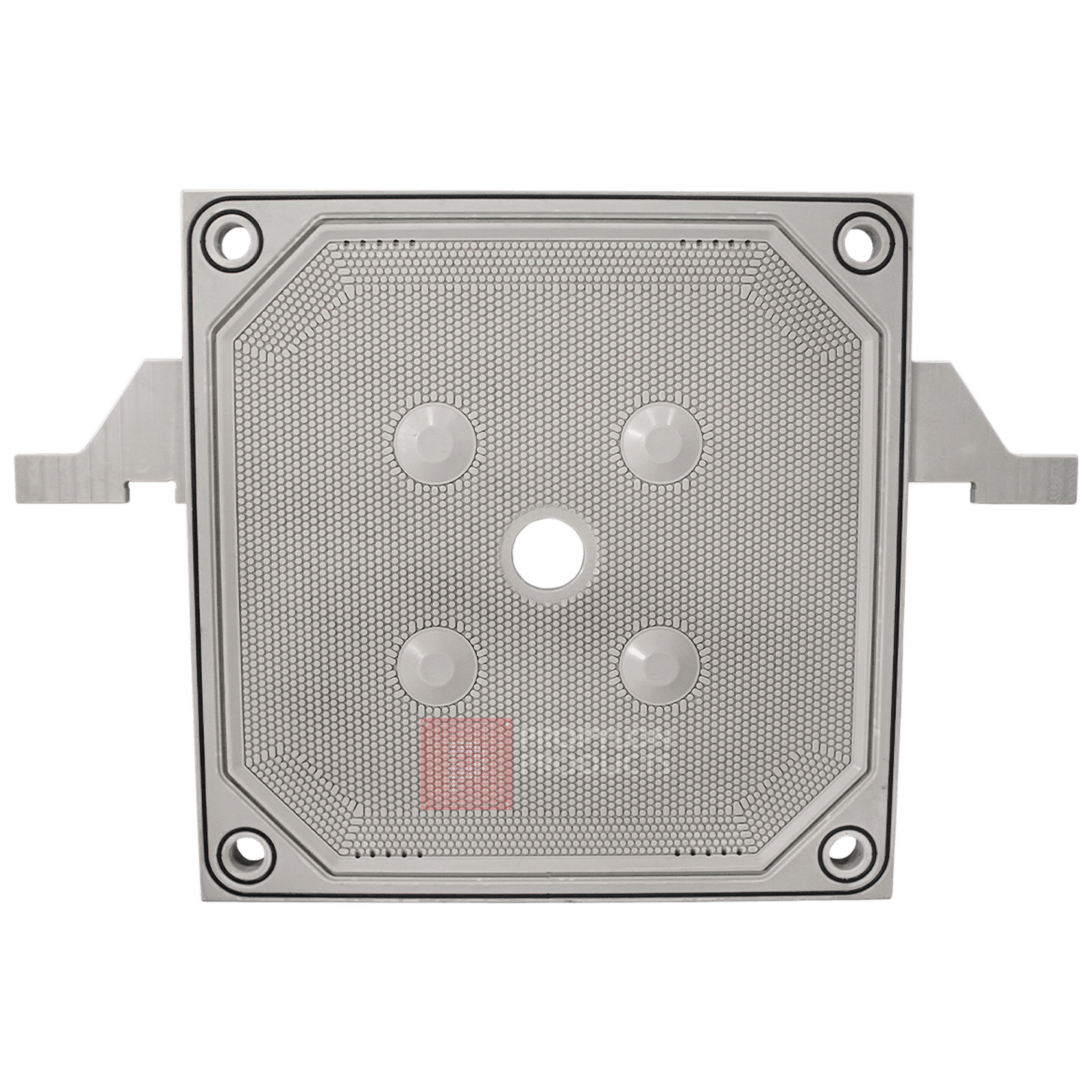
Whether the process involves copper concentrate, iron ore tailings, coal fines, silica, limestone, phosphate, or precious metal recovery, the performance of the filter press often depends heavily on the quality and durability of the filter plates.
Choosing the right filter plate is not simply a maintenance decision. It directly affects production efficiency, cake dryness, operating costs, and equipment reliability. In demanding mining environments, the wrong plate selection can lead to premature wear, frequent downtime, and significant financial losses.
Understanding how filter plates perform under abrasive and high-temperature conditions is essential for achieving long-term filtration success.
Why Mining Filtration Is Different
Mining and mineral processing plants operate under conditions that are considerably more challenging than many other industries.
Slurries often contain:
- Sharp mineral particles
- High solid concentrations
- Dense abrasive material
- Elevated temperatures
- Variable particle sizes
- Chemically aggressive compounds
These characteristics create constant stress on filtration equipment.
As a result, Filter Plates for Mining and Mineral Processing must be designed not only for filtration performance but also for durability and long service life.
The Role of Filter Plates in Mineral Processing
Within a filter press, plates perform several important functions.
They:
- Form filtration chambers
- Support filter cloths
- Withstand hydraulic pressure
- Direct filtrate flow
- Maintain sealing integrity
In mining applications, these responsibilities become even more critical because the filtration process often operates continuously under heavy loads.
When filter plates fail, production losses can occur quickly.
This is why selecting the right Filter Plates for Mining and Mineral Processing is a key part of plant reliability planning.
Understanding Abrasive Slurry Challenges
Abrasive wear is one of the leading causes of filter plate deterioration in mining operations.
Many mineral slurries contain particles that continuously impact plate surfaces during:
- Chamber filling
- Filtration cycles
- Cake discharge
- Cleaning operations
Over time, this abrasion can affect:
- Feed ports
- Filtrate channels
- Chamber surfaces
- Sealing areas
Even small amounts of wear can gradually reduce filtration efficiency and increase maintenance requirements.
Common Abrasive Materials
Examples of highly abrasive mineral slurries include:
- Silica sand
- Iron ore concentrates
- Copper concentrates
- Coal slurry
- Bauxite residue
- Quartz-rich materials
Each of these materials creates unique wear patterns that influence plate lifespan.
Why Polypropylene Remains the Preferred Material
Despite the demanding conditions found in mining operations, polypropylene remains the most widely used material for Filter Plates for Mining and Mineral Processing.
This popularity comes from its balance of properties:
- Excellent corrosion resistance
- Good impact strength
- Lightweight construction
- Cost-effective manufacturing
- Resistance to many process chemicals
Modern polypropylene filter plates are engineered to withstand significant mechanical loads while maintaining dimensional stability.
For many mining applications, polypropylene offers the best balance between performance and cost.
High-Temperature Slurries Present Additional Challenges
Temperature is another factor that significantly affects filter plate performance.
Many mineral processing operations involve:
- Hot process water
- Heated slurry streams
- Thermal recovery systems
- Elevated ambient conditions
As temperatures increase, materials experience greater stress.
High temperatures can contribute to:
- Material expansion
- Reduced mechanical strength
- Accelerated wear
- Increased deformation risk
When selecting Filter Plates for Mining and Mineral Processing, temperature ratings should always be evaluated alongside slurry characteristics.
Choosing the Right Plate Design
Material selection is important, but plate design also plays a major role in performance.
Different applications may benefit from:
Recessed Chamber Plates
These plates are widely used in mining due to their simplicity and reliability.
Benefits include:
- Easy operation
- Strong structural design
- Efficient dewatering
- Low maintenance requirements
Membrane Filter Plates
For operations requiring lower cake moisture, membrane plates provide an additional squeezing stage.
Advantages include:
- Improved cake dryness
- Reduced transport costs
- Better solids recovery
- Lower disposal expenses
CGR Filter Plates
Applications requiring enhanced sealing may benefit from CGR designs.
These plates help minimize:
- Leakage
- Product loss
- Contamination risks
Selecting the appropriate configuration is just as important as choosing the right material.
The Impact of Abrasion on Plate Life
Abrasion does not usually cause immediate failure.
Instead, it gradually affects critical areas such as:
- Feed eye surfaces
- Chamber walls
- Filtrate ports
- Sealing edges
This wear can lead to:
- Leakage
- Reduced chamber volume
- Poor cake formation
- Increased maintenance frequency
Routine inspections are essential for identifying wear before it affects production.
The most effective Filter Plates for Mining and Mineral Processing are those that balance wear resistance with maintainability.
Real-World Example: Tailings Dewatering Operation
Consider a mining operation processing iron ore tailings.
The plant operates continuously and handles slurry with high solids content and significant abrasive characteristics.
Initially, frequent maintenance was required due to wear around feed ports and chamber surfaces.
After upgrading to heavy-duty polypropylene filter plates designed specifically for abrasive applications, the operation experienced:
- Longer plate life
- Reduced downtime
- Improved filtration consistency
- Lower maintenance costs
The filtration process itself did not change. The improvement came from selecting plates better suited to the operating environment.
Maintenance Considerations for Mining Applications
Even the most durable plates require routine maintenance.
A practical maintenance program should include:
Daily Inspections
- Check for visible wear
- Inspect leakage points
- Verify plate alignment
Monthly Inspections
- Examine feed ports
- Inspect sealing surfaces
- Review filtration performance
Annual Reviews
- Measure wear patterns
- Evaluate plate condition
- Plan replacements proactively
Proper maintenance extends the life of Filter Plates for Mining and Mineral Processing and reduces unexpected failures.
Factors to Consider Before Selecting Filter Plates
Before choosing filter plates, operators should evaluate:
Slurry Characteristics
Understand:
- Particle size
- Solids concentration
- Abrasiveness
- Chemical composition
Operating Temperature
Review:
- Normal operating temperatures
- Peak temperatures
- Cleaning temperatures
Filtration Requirements
Determine:
- Desired cake dryness
- Cycle time targets
- Throughput requirements
Maintenance Expectations
Consider:
- Inspection frequency
- Spare parts availability
- Replacement strategy
A complete evaluation leads to better equipment selection and more predictable operation.
Common Mistakes in Plate Selection
Several mistakes frequently shorten filter plate life in mining applications.
These include:
- Choosing based solely on price
- Ignoring abrasion levels
- Overlooking temperature effects
- Underestimating solids concentration
- Selecting incorrect plate configurations
Avoiding these mistakes often saves far more money than the initial cost difference between plate options.
Future Trends in Mining Filtration
Mining companies are increasingly focused on:
- Water recovery
- Tailings management
- Energy efficiency
- Environmental compliance
These goals place greater demands on filtration systems.
As a result, Filter Plates for Mining and Mineral Processing continue to evolve with improved materials, stronger designs, and enhanced dewatering capabilities.
Future developments are likely to focus on extending plate life while improving filtration performance under increasingly challenging conditions.
Final Thoughts
Filter Plates for Mining and Mineral Processing operate in some of the harshest environments found in industrial filtration. Abrasive particles, high solid concentrations, elevated temperatures, and continuous operation all place extraordinary demands on filtration equipment.
Success depends on selecting plates that can withstand these conditions while maintaining consistent performance. Material choice, plate design, maintenance practices, and process understanding all contribute to long-term reliability.
When the right filter plates are matched to the application, mining operations benefit from improved cake dryness, reduced downtime, lower maintenance costs, and greater overall efficiency.
In a competitive industry where every hour of production matters, that advantage can make a significant difference.