
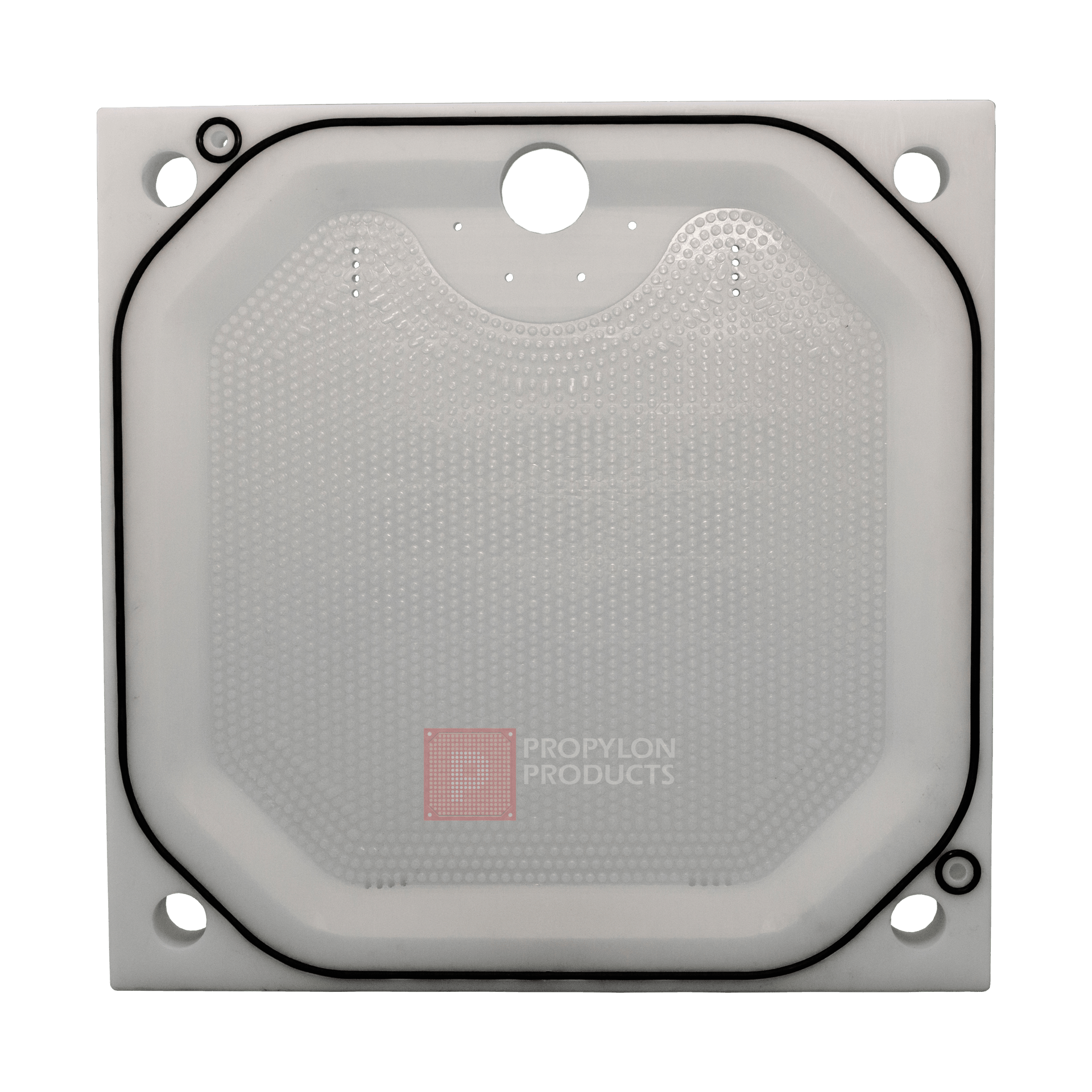
A filter press is not simply a machine that separates solids from liquids. It is a carefully engineered system made up of plates, filter cloths, hydraulic mechanisms, support structures, sealing systems, and various accessories. Each component has a specific role, and even a small issue in one area can affect the performance of the entire filtration process.
For plant operators, maintenance teams, and buyers, understanding these components is essential. It helps improve equipment selection, simplify troubleshooting, reduce downtime, and maximize return on investment.
This guide explains the major Filter Press Components, how they work, and why each one matters.
Why Understanding Filter Press Components Matters
Many filtration problems are mistakenly blamed on the filter press itself when the actual issue lies with a specific component.
Common operational challenges such as:
- Leakage between plates
- Wet filter cake
- Slow cycle times
- Cloth blinding
- Plate cracking
- Poor filtrate clarity
often originate from a single component rather than the machine as a whole.
A solid understanding of Filter Press Components allows operators to identify problems more quickly and maintain consistent filtration performance.
Filter Plates: The Heart of the Filter Press
Among all Filter Press Components, filter plates are arguably the most important.
Filter plates form the chambers where solid-liquid separation occurs. During operation, slurry enters the chambers, liquid passes through the filter cloth, and solids accumulate inside the plate cavity to form filter cake.
Common Types of Filter Plates
Recessed Chamber Plates
The most widely used plate design.
Advantages include:
- Simple operation
- Low maintenance
- Reliable performance
- Broad industrial applicability
Membrane Filter Plates
Designed with a flexible membrane that compresses the cake after filtration.
Benefits include:
- Lower cake moisture
- Faster dewatering
- Improved solids handling
CGR Plates
CGR stands for Caulked Gasketed Recessed.
These plates provide:
- Enhanced sealing
- Reduced leakage
- Cleaner operation
Selecting the correct plate type is one of the most important decisions when evaluating Filter Press Components.
Filter Cloths: Where Filtration Actually Happens
Although filter plates receive much of the attention, filter cloths perform the actual filtration.
The cloth acts as the filtration medium, allowing liquid to pass while retaining solids.
Different applications require different cloth materials and weave patterns.
Common cloth materials include:
- Polypropylene
- Polyester
- Nylon
- Specialty synthetic fibers
Why Cloth Selection Matters
A properly selected cloth influences:
- Filtration speed
- Cake release
- Filtrate clarity
- Cloth lifespan
Many performance issues that appear to be equipment problems are actually related to incorrect cloth selection.
For this reason, filter cloths are among the most critical Filter Press Components.
The Filter Press Frame
The frame provides structural support for the entire filtration system.
It holds:
- The plate stack
- Hydraulic closing system
- Moving and fixed heads
- Plate shifting mechanisms
A typical frame consists of:
- Side bars
- Main beams
- End supports
- Structural reinforcement
The frame must withstand substantial pressure during operation while maintaining precise alignment.
Without a strong frame, even high-quality plates and cloths cannot function effectively.
Hydraulic Closing System
The hydraulic system is responsible for generating the force required to compress the plate pack.
This compression creates the sealed chambers necessary for filtration.
Hydraulic systems generally include:
- Hydraulic cylinders
- Hydraulic power packs
- Pressure control valves
- Oil reservoirs
Proper hydraulic performance is essential because insufficient pressure can lead to:
- Leakage
- Poor sealing
- Reduced filtration efficiency
Among all Filter Press Components, the hydraulic system directly affects chamber integrity.
Gaskets and Sealing Systems
Sealing systems prevent slurry from escaping between plates during operation.
Depending on the plate design, sealing may rely on:
- Plate-to-plate contact
- Molded sealing surfaces
- Replaceable gaskets
- CGR sealing systems
Why Gaskets Matter
A damaged gasket can cause:
- Product loss
- Workplace contamination
- Reduced pressure
- Increased maintenance requirements
For industries requiring high levels of cleanliness or product recovery, gasket condition is especially important.
Well-maintained sealing systems contribute significantly to overall filtration performance.
Feed System Components
The feed system delivers slurry into the filter press chambers.
This system typically includes:
- Feed pumps
- Feed manifolds
- Feed piping
- Control valves
Feed performance affects:
- Cake formation
- Filtration speed
- Chamber filling consistency
Even the best Filter Press Components cannot compensate for poor slurry distribution.
Proper feed system design ensures balanced chamber loading and consistent operation.
Filtrate Collection System
Once liquid passes through the filter cloth, it must be collected and discharged efficiently.
The filtrate collection system includes:
- Filtrate ports
- Drainage channels
- Collection trays
- Outlet piping
A properly functioning system prevents:
- Flow restrictions
- Pressure imbalances
- Product contamination
Regular cleaning of these components helps maintain filtration efficiency.
Plate Shifting Mechanism
Semi-automatic and fully automatic filter presses often include plate shifting systems.
These mechanisms separate plates after filtration for cake discharge.
Common systems include:
- Manual plate movement
- Hydraulic plate shifting
- Automatic plate shifters
The choice depends on:
- Plant size
- Labor availability
- Throughput requirements
Automation can significantly improve productivity in large-scale operations.
Cake Discharge Accessories
Cake discharge is an important stage of the filtration cycle.
Accessories used in this area may include:
- Drip trays
- Cake conveyors
- Vibrators
- Automatic cake knockers
These components help ensure efficient solids removal and minimize operator involvement.
For high-volume filtration operations, cake discharge accessories often provide substantial productivity benefits.
Cloth Washing Systems
Over time, filter cloths become partially blocked by fine particles.
Cloth washing systems help restore filtration performance by cleaning the cloth surface.
These systems may be:
- Manual
- Semi-automatic
- Fully automatic
Regular cloth cleaning improves:
- Filtration rates
- Cake release
- Cloth lifespan
This makes cloth washing equipment an important part of modern Filter Press Components configurations.
Control Panels and Automation Systems
Modern filter presses increasingly rely on automation.
Control systems may manage:
- Hydraulic operation
- Feed cycles
- Membrane squeezing
- Plate shifting
- Safety monitoring
Automation improves consistency while reducing operator intervention.
Advanced systems can also provide:
- Performance monitoring
- Alarm notifications
- Data logging
- Process optimization
Real-World Example: One Small Component, One Big Problem
A chemical manufacturing plant experienced repeated leakage issues despite replacing filter cloths and increasing hydraulic pressure.
After a detailed inspection, the actual cause was discovered.
A damaged gasket on several plates was preventing proper sealing.
The replacement cost was minimal, but the impact on filtration performance was significant.
This example illustrates an important lesson. Every one of the Filter Press Components contributes to overall system performance.
Ignoring small parts can lead to large operational problems.
How Components Work Together
A filter press functions as an integrated system.
For example:
- Plates form the chambers
- Cloths perform filtration
- Hydraulics provide sealing pressure
- Gaskets prevent leakage
- Feed systems distribute slurry
- Filtrate systems remove liquid
When one component underperforms, the entire process is affected.
This is why maintenance programs should evaluate the complete system rather than individual parts in isolation.
Maintenance Priorities for Filter Press Components
To maximize equipment life, operators should routinely inspect:
Daily
- Cloth condition
- Leakage points
- Hydraulic pressure
Monthly
- Plate surfaces
- Feed ports
- Filtrate channels
- Sealing systems
Annually
- Structural frame condition
- Hydraulic components
- Automation systems
- Wear patterns
Consistent maintenance extends the life of all major Filter Press Components and improves overall reliability.
Final Thoughts
Filter Press Components work together to create an efficient and reliable filtration process. Plates, cloths, frames, hydraulic systems, gaskets, feed equipment, and accessories all play essential roles in achieving effective solid-liquid separation.
Understanding these components helps operators troubleshoot problems more effectively, make informed purchasing decisions, and maintain consistent filtration performance over time.
Whether you operate a small manual filter press or a large automated system, the principles remain the same. Every component matters. When each part is properly selected, maintained, and integrated, the entire filtration process becomes more productive, more reliable, and more cost-effective.