
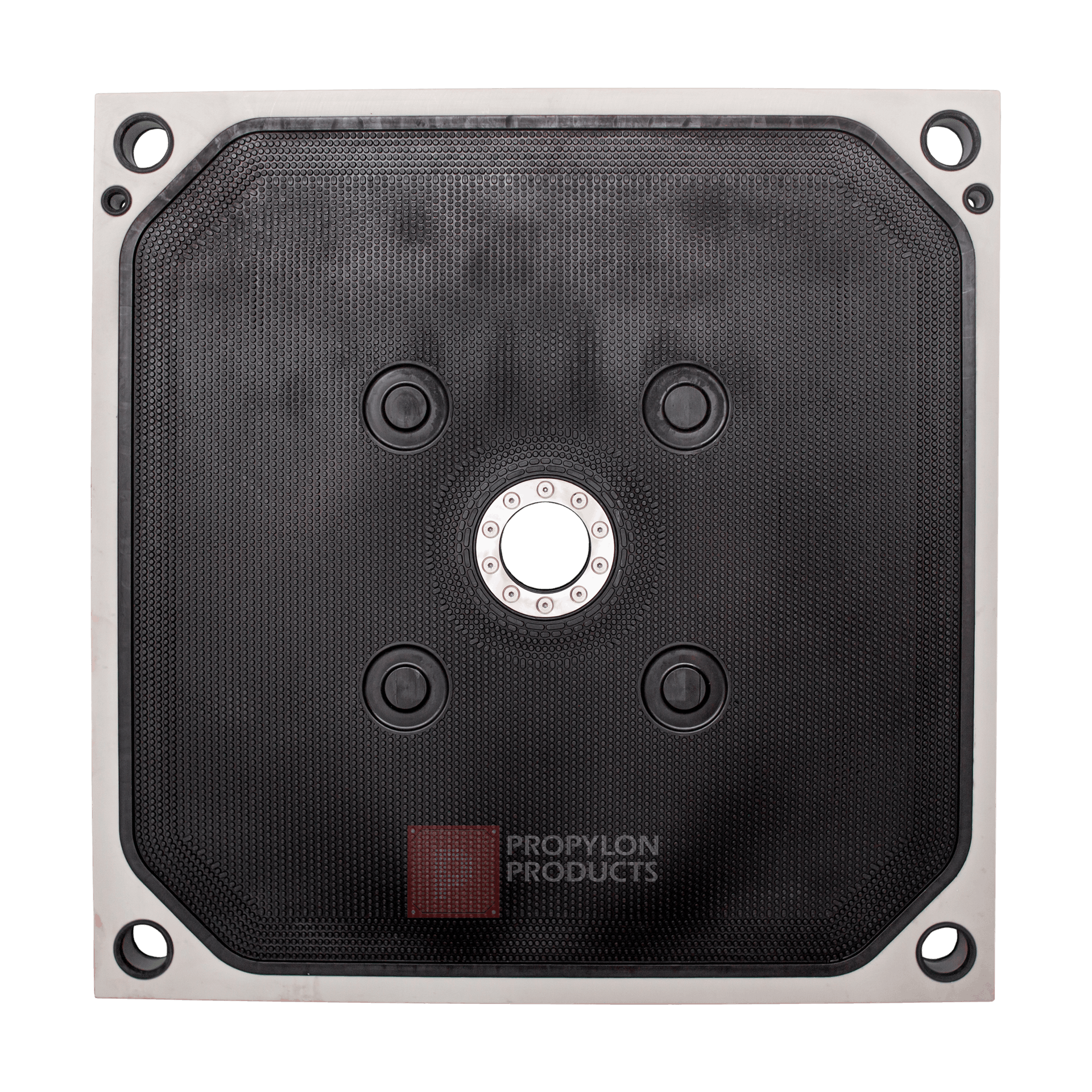
Membrane Filter Plate is a term that often comes up when industries are trying to improve cake dryness and filtration efficiency. At a basic level, it looks similar to a standard filter plate, but its role inside the filter press is very different.
Instead of relying only on filtration pressure, a membrane filter plate adds a second stage to the process. After the chamber fills and cake forms, the membrane expands and applies pressure directly onto the cake. This extra step removes additional moisture that filtration alone cannot achieve.
That sounds straightforward, but the real decision begins when you look at how these plates are constructed. Not all membrane plates are built the same. The difference between replaceable and welded block designs can have a significant impact on maintenance, cost, and long-term performance.
What Is a Membrane Filter Plate in Practical Terms
A Membrane Filter Plate is designed to perform two functions within the same filtration cycle.
First, it acts like a conventional plate, forming chambers where slurry enters and filtration takes place. Then, once the cake is formed, the membrane inside the plate inflates using air or water pressure.
This creates a squeezing effect that compresses the cake and forces out trapped liquid.
In real plant conditions, this additional step often leads to:
- Lower cake moisture
- Better handling of solids
- Reduced drying or disposal cost
- More consistent dewatering performance
That is why membrane plates are widely used in applications where filtration alone is not enough.
Why Membrane Plate Design Is Not Just a Detail
At first glance, the difference between replaceable and welded designs may seem like a minor engineering variation. In practice, it affects how the plate behaves over time.
The Membrane Filter Plate is not a static component. It operates under pressure, flexes repeatedly during cycles, and is exposed to slurry that may be abrasive, chemical, or unpredictable.
Because of this, the internal construction becomes very important. It determines how easy the plate is to maintain, how long it lasts, and how costly repairs will be.
This is where the comparison between replaceable and welded block designs becomes relevant.
Replaceable Membrane Filter Plate Design
In a replaceable design, the membrane is a separate component that can be removed and replaced when it wears out or gets damaged.
The plate body remains intact, and only the membrane layer is changed.
Advantages
One of the biggest advantages of a replaceable Membrane Filter Plate is flexibility. If the membrane gets damaged, you do not need to replace the entire plate.
This reduces maintenance cost and downtime.
Other benefits include:
- Easier servicing
- Lower replacement cost over time
- Ability to replace only worn parts
- Better adaptability for different applications
For plants that operate continuously or deal with aggressive slurry, this design often makes practical sense.
Welded Block Membrane Filter Plate Design
In a welded block design, the membrane is permanently bonded or welded into the plate structure. It is not designed to be removed or replaced separately.
If the membrane fails, the entire plate typically needs to be replaced.
Advantages
The welded Membrane Filter Plate is often considered more robust in terms of construction. Because the membrane is integrated into the plate, there are fewer joints and potential leakage points.
This can provide:
- Strong structural integrity
- Reduced risk of membrane misalignment
- Simpler assembly
- Reliable performance in stable conditions
However, the tradeoff comes in maintenance and long-term cost.
Key Difference: Maintenance Approach
The most practical difference in the Membrane Filter Plate comparison is how maintenance is handled.
With replaceable designs, maintenance is modular. You can change the membrane without disturbing the entire plate setup.
With welded designs, maintenance is more straightforward in terms of inspection, but more expensive when replacement is required.
In real-world operation, this difference becomes important when:
- Membranes wear out frequently
- Slurry is abrasive or chemically aggressive
- Downtime needs to be minimized
This is where replaceable designs often provide a long-term advantage.
Cost Comparison: Short Term vs Long Term
At the time of purchase, welded plates may appear more cost-effective due to their simpler construction.
Replaceable Membrane Filter Plate designs may have a higher initial cost because of their modular structure.
However, the cost balance shifts over time.
Replaceable plates often reduce:
- Replacement expenses
- Downtime during maintenance
- Inventory cost for spare parts
Welded plates, on the other hand, may require full plate replacement, which can increase long-term operating cost in demanding applications.
This is why cost evaluation should always consider lifecycle, not just purchase price.
Performance and Reliability in Real Conditions
In terms of filtration performance, both designs can deliver similar results when new and properly maintained.
The difference becomes noticeable over time.
Replaceable designs allow easier restoration of performance because worn membranes can be replaced without replacing the entire plate.
Welded designs depend more heavily on the durability of the original construction.
For many plants, the choice of Membrane Filter Plate comes down to how often maintenance is expected and how critical uptime is.
Real-World Example: Maintenance Makes the Difference
Consider a plant handling chemical sludge with abrasive particles. They initially use welded membrane plates.
Over time, membrane wear increases, and plate replacement becomes frequent and costly.
After switching to replaceable membrane plates, they are able to change only the membrane layer when needed. This reduces both cost and downtime.
The filtration process remains the same, but maintenance becomes far more manageable.
This is a common scenario where design choice directly affects operational efficiency.
When to Choose Replaceable Membrane Plates
A replaceable Membrane Filter Plate is often the better choice when:
- Slurry is abrasive or aggressive
- Membrane wear is expected
- Maintenance flexibility is important
- Downtime needs to be minimized
- Long-term cost control is a priority
In these conditions, the ability to replace only the membrane provides a clear advantage.
When Welded Membrane Plates Make Sense
Welded plates can be suitable when:
- Operating conditions are stable
- Slurry is not highly abrasive
- Maintenance frequency is low
- Initial investment needs to be minimized
- Simplicity is preferred
In these cases, the durability of the welded structure can be sufficient.
Final Thoughts
Membrane Filter Plate selection is not just about improving cake dryness. It is also about choosing the right design for your operating conditions.
Replaceable and welded block designs both have their place. One offers flexibility and easier maintenance. The other offers structural simplicity and potentially lower upfront cost.
The key is to look beyond the initial specification and consider how the plate will perform over time in your specific process.
When the design is chosen correctly, the filter press becomes more reliable, easier to maintain, and more cost-effective in the long run. And in industrial filtration, those are the factors that matter most.