
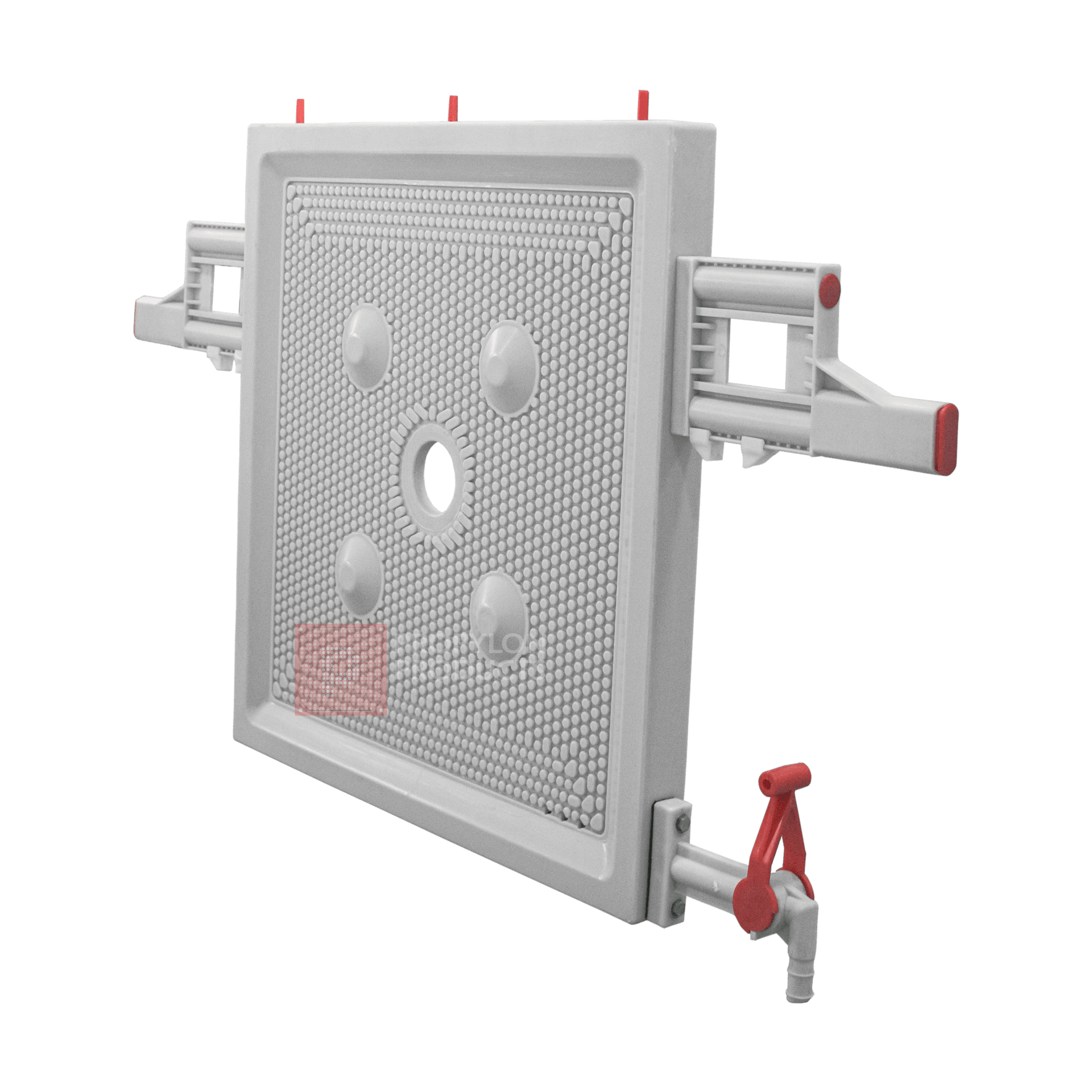
Recessed Chamber vs Membrane Filter Plates is a comparison that often comes up when industries are trying to improve filtration performance or reduce operating costs. At first glance, both plate types look similar. They are installed in the same filter press, use the same basic filtration principle, and handle the same slurry.
But once the cycle begins, the difference becomes very clear.
Choosing between these two is not just a technical decision. It affects cycle time, cake dryness, energy consumption, and even long term operating cost. This is why understanding the real difference matters before making a choice.
Why Plate Selection Matters More Than Expected
Many buyers focus heavily on the filter press itself and treat plate selection as a secondary detail. In practice, the plate type plays a major role in how the machine performs.
The plate determines:
- How cake forms inside the chamber
- How much moisture remains in the cake
- How long each cycle takes
- How much pressure is applied during dewatering
This is why the debate around Recessed Chamber vs Membrane Filter Plates is not just about design. It is about process performance.
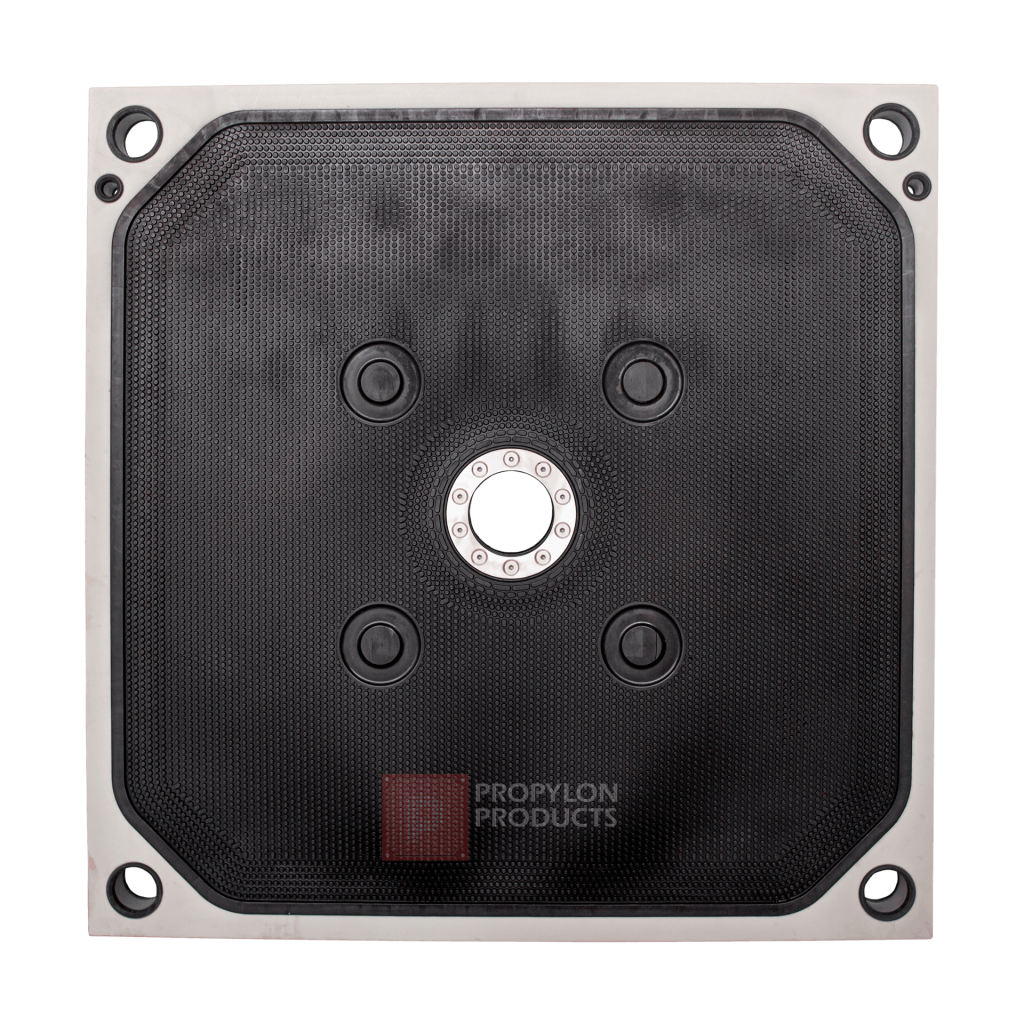
What Are Recessed Chamber Filter Plates
Recessed chamber plates are the most commonly used filter plates in standard filter presses. They form fixed chambers between two plates, where slurry enters and filtration takes place.
As slurry is pumped in, solids accumulate and form a cake. The filtration process continues until the chamber is full and resistance increases.
At that point, the cycle is complete.
In the context of Recessed Chamber vs Membrane Filter Plates, recessed plates rely entirely on filtration pressure. There is no additional mechanical step to remove moisture beyond what filtration can achieve naturally.
What Are Membrane Filter Plates
Membrane filter plates are designed to go one step further.
After the initial filtration stage, the membrane surface inside the plate inflates using air or water pressure. This creates a squeezing effect on the filter cake.
Instead of relying only on filtration, the system actively compresses the cake and forces out additional liquid.
This is the key difference in the Recessed Chamber vs Membrane Filter Plates comparison. Membrane plates combine filtration and mechanical dewatering in the same cycle.
Key Difference: Filtration vs Filtration Plus Squeezing
The simplest way to understand Recessed Chamber vs Membrane Filter Plates is this:
Recessed chamber plates stop when filtration reaches its natural limit.
Membrane plates continue beyond that limit by applying mechanical pressure.
In real terms, this means membrane plates can remove moisture that would otherwise remain trapped inside the cake.
For processes where cake dryness is critical, this difference is not small. It is often the deciding factor.
Cake Dryness and Its Real Impact
Cake dryness is not just a technical metric. It has a direct impact on cost and handling.
With recessed plates, the final moisture level depends entirely on filtration efficiency. In many cases, this is sufficient.
However, for compressible or fine particle slurry, filtration alone may not achieve the desired dryness.
This is where membrane plates stand out in the Recessed Chamber vs Membrane Filter Plates comparison.
Drier cake leads to:
- Lower disposal cost
- Reduced transport weight
- Easier handling
- Less need for further drying
In industries where waste disposal or material recovery is expensive, this advantage can be significant.
Cycle Time and Productivity
At first, it may seem that adding a squeezing stage would increase total cycle time. In some cases, it does add a short additional step.
However, membrane plates often reduce overall cycle time because they eliminate the need for extended filtration.
Instead of waiting longer for minimal moisture reduction, the process shifts to a more effective squeezing stage.
This is an important point in the Recessed Chamber vs Membrane Filter Plates decision. Efficiency is not just about time per stage, but total output per day.
Cost Comparison: Initial vs Long Term
Recessed chamber plates are generally more affordable. They have a simpler design and lower initial cost.
Membrane plates, on the other hand, require a higher investment due to their advanced construction and additional systems.
But the cost discussion in Recessed Chamber vs Membrane Filter Plates should not stop at purchase price.
Membrane plates often reduce:
- Disposal cost
- Energy required for drying
- Labor for handling wet cake
- Number of filtration cycles
Over time, these savings can offset the higher initial investment, especially in demanding applications.
Which Slurry Type Works Best With Each Plate
Choosing between these two options depends heavily on slurry characteristics.
Recessed chamber plates are suitable for:
- Free draining slurry
- Coarse particles
- Applications where moderate dryness is acceptable
- Processes with lower cost sensitivity to moisture
Membrane plates are better for:
- Fine or compressible solids
- Sludge and difficult slurry
- Applications requiring low cake moisture
- Situations where disposal cost is high
This is why the Recessed Chamber vs Membrane Filter Plates decision should always be based on actual process conditions, not just equipment preference.
Real-World Example: Same Plant, Different Results
Consider a plant handling chemical sludge with high moisture content. Initially, they use recessed chamber plates and find that cake remains too wet for economical disposal.
After switching to membrane plates, the plant achieves significantly drier cake without increasing filtration time.
The change does not just improve dryness. It reduces disposal frequency and lowers overall operating cost.
This kind of result is common when the right plate type is matched to the process.
When Recessed Chamber Plates Make More Sense
Not every application needs membrane technology.
Recessed chamber plates remain a strong and reliable choice when:
- Budget is limited
- Slurry filters easily
- High dryness is not critical
- Operating simplicity is preferred
In these cases, the added complexity and cost of membrane plates may not be justified.
When Membrane Plates Are the Better Investment
Membrane plates become the better option when:
- Cake dryness directly affects cost
- Slurry is difficult to dewater
- Filtration alone reaches its limit too early
- Long term efficiency is more important than initial price
This is where the real advantage in the Recessed Chamber vs Membrane Filter Plates comparison becomes clear.
Final Thoughts
Recessed Chamber vs Membrane Filter Plates is not a question of which technology is better overall. It is a question of which one fits your process.
Recessed chamber plates offer simplicity, reliability, and lower upfront cost. Membrane plates offer improved dewatering, better cake dryness, and long term savings in the right conditions.
The key is to evaluate your slurry, your operating goals, and your cost priorities carefully. When the plate type is matched correctly to the application, the filter press performs more efficiently and the entire process becomes easier to manage.
And in industrial filtration, that kind of alignment makes all the difference.