
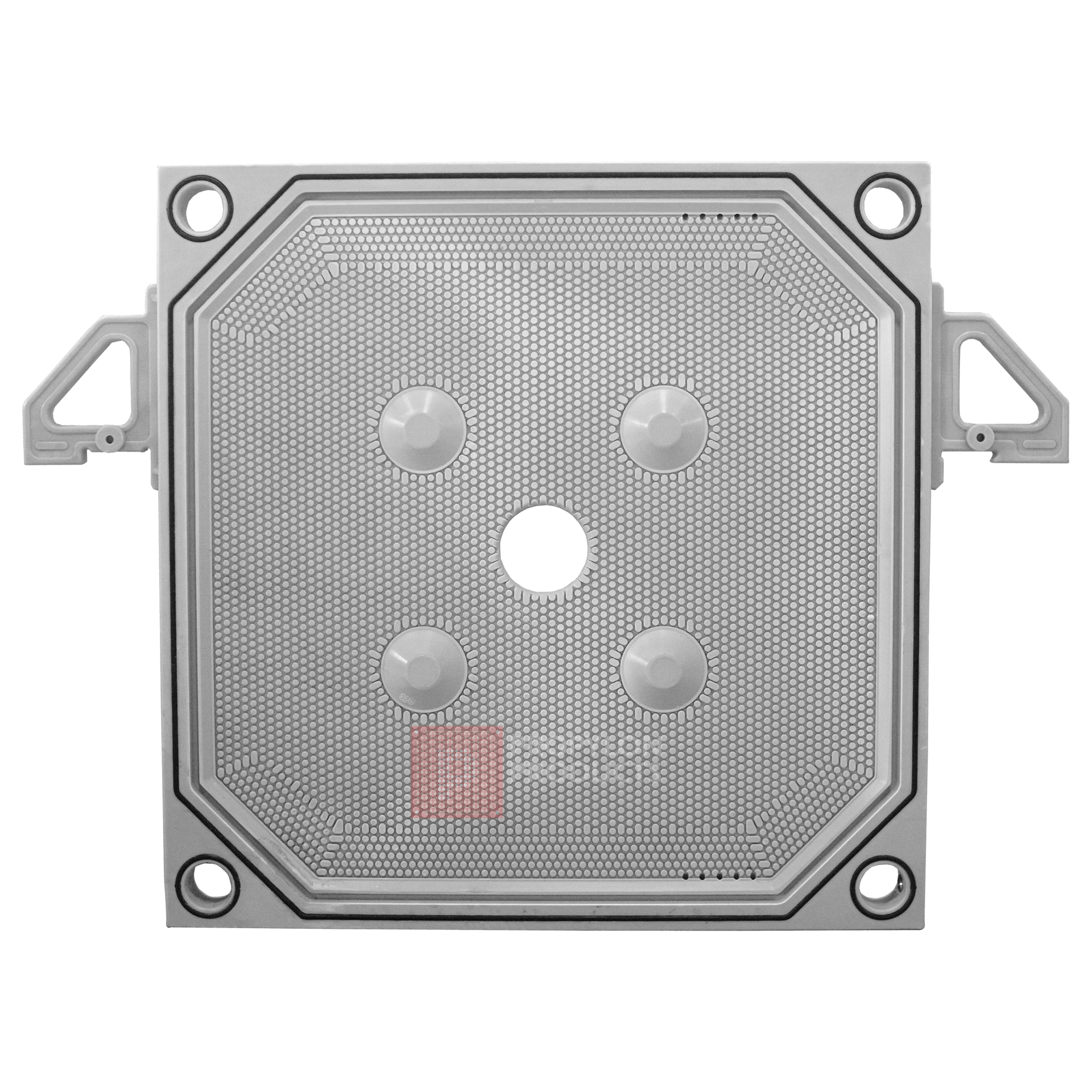
CGR Filter Plate is a term that often appears in technical discussions around advanced filtration systems, especially in industries where leakage, contamination, or process control cannot be compromised. While many operators are familiar with recessed chamber plates, the CGR design introduces an additional level of sealing that changes how the filter press behaves under pressure.
At a basic level, CGR stands for Caulked Gasketed Recessed. But the real value of this design is not in the name. It lies in how it improves sealing between plates and controls filtrate flow more effectively.
Understanding when and why this plate is used can help avoid common filtration issues that standard plate designs sometimes struggle to handle.
What Is a CGR Filter Plate in Practical Terms
A CGR Filter Plate is a recessed chamber plate that includes a gasketed sealing surface around the filtration area. This gasket creates a tighter seal between adjacent plates when the press is closed.
In a standard recessed plate, sealing depends primarily on plate surface contact. In a CGR plate, the gasket acts as an additional barrier, preventing slurry or filtrate from escaping between plates.
This design is particularly useful in applications where even small leakage can cause problems.
How the CGR Design Works During Filtration
When the filter press is closed, the gasket on each CGR Filter Plate compresses against the adjacent plate. This creates a sealed environment inside each chamber.
As slurry is pumped into the press:
- Liquid passes through the filter cloth
- Solids are retained inside the chamber
- The gasket prevents cross-leakage between chambers
The result is a more controlled filtration process, with reduced chances of side leakage or contamination.
In real plant conditions, this often leads to cleaner operation and more consistent results.
Why Standard Plates Sometimes Fall Short
Standard recessed plates work well in many applications. However, they rely heavily on perfect alignment and clean sealing surfaces.
In demanding conditions, small issues can appear:
- Minor plate misalignment
- Surface wear over time
- Fine particles escaping through edges
- Leakage between chambers
These may not seem critical at first, but they can affect filtrate clarity, product recovery, and overall efficiency.
This is where the CGR Filter Plate becomes a valuable upgrade.
Key Advantage: Superior Sealing
The most important benefit of a CGR Filter Plate is its sealing capability.
The gasket creates a defined sealing line, which reduces the dependence on perfect plate-to-plate contact. Even if minor irregularities exist, the gasket helps maintain a tight seal.
This leads to:
- Reduced leakage
- Cleaner filtrate
- Better separation between chambers
- Improved process reliability
In industries where product purity or environmental control is important, this advantage becomes critical.
Improved Filtrate Quality and Process Control
In many applications, the liquid phase is just as important as the solid cake. Contamination or mixing between chambers can reduce product quality or require additional processing.
By preventing cross-leakage, the CGR Filter Plate helps maintain cleaner filtrate streams.
This is especially valuable in:
- Chemical processing
- Pharmaceutical production
- Food and beverage applications
- Fine chemical manufacturing
In these industries, even small improvements in filtrate clarity can have a significant impact.
Better Performance With Fine or Difficult Slurry
Fine particles and compressible solids are more likely to cause leakage or bypass issues in standard plates.
A CGR Filter Plate handles these conditions more effectively because the gasket limits unintended flow paths.
This results in:
- More stable filtration cycles
- Better cake formation
- Reduced loss of fine solids
- Improved consistency
For plants dealing with difficult slurry, this added control can make filtration far more predictable.
Maintenance Considerations
While the CGR design improves sealing, it also introduces an additional component that requires attention.
The gasket itself can wear out over time, especially in abrasive or chemically aggressive environments.
This means maintenance of a CGR Filter Plate includes:
- Regular gasket inspection
- Replacement when damaged or worn
- Ensuring proper seating during installation
However, this added maintenance is often balanced by reduced leakage and improved process performance.
Cost Perspective: Is CGR Worth It
CGR plates are typically more expensive than standard recessed plates due to their additional design features.
At first, this may seem like a drawback. But in many cases, the cost is justified by operational benefits.
A CGR Filter Plate can reduce:
- Product loss due to leakage
- Reprocessing of contaminated filtrate
- Cleaning and maintenance effort
- Downtime caused by sealing issues
When these factors are considered, the higher initial cost often becomes a practical investment.
Real-World Example: Where CGR Makes the Difference
Consider a chemical plant dealing with fine slurry where even minor leakage affects product quality.
With standard plates, they experience occasional cross-leakage, leading to inconsistent filtrate clarity.
After switching to CGR plates, the leakage is eliminated and filtrate quality stabilizes. The process becomes more predictable, and the need for reprocessing is reduced.
This is a typical case where the CGR Filter Plate provides value beyond its basic function.
When Should You Use a CGR Filter Plate
A CGR Filter Plate is the right choice when:
- Leakage between plates must be minimized
- Filtrate quality is critical
- Slurry contains fine or difficult particles
- Product contamination must be avoided
- Process consistency is a priority
In these situations, the improved sealing justifies the additional cost.
When Standard Plates May Be Enough
CGR plates are not always necessary.
Standard recessed plates can perform well when:
- Slurry is easy to filter
- Leakage is not a major concern
- Cost needs to be minimized
- Operating conditions are stable
In such cases, the simpler design may be more practical.
Final Thoughts
CGR Filter Plate technology offers a clear advantage in applications where sealing, filtration control, and process reliability are critical. By adding a gasketed sealing system to the traditional recessed plate design, it addresses some of the most common challenges in filtration.
The decision to use CGR plates should be based on process needs rather than preference. When leakage, contamination, or consistency becomes an issue, this design can provide a noticeable improvement.
In industrial filtration, small design changes often lead to significant operational gains. The CGR plate is a good example of how thoughtful engineering can solve real-world problems effectively.