
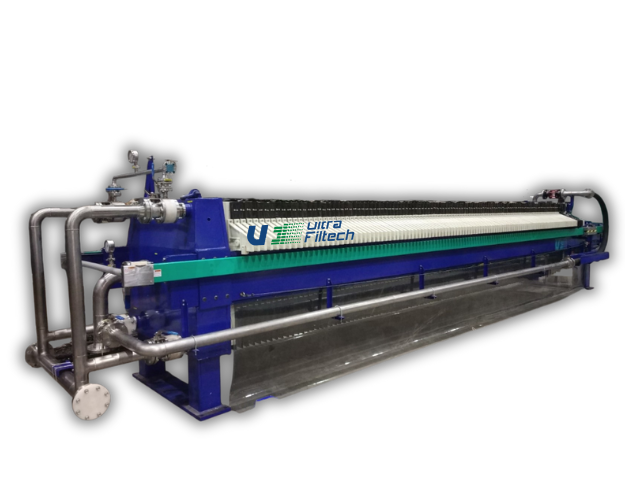
Plate and Frame Semi Automatic Filter Press is a practical filtration solution designed to bridge the gap between fully manual and fully automatic systems. It combines the proven plate and frame filtration principle with hydraulic assistance, reducing manual effort while keeping investment cost under control. This makes it an ideal choice for medium-scale industries that want better productivity without the complexity of full automation.
This guide explains what a plate and frame semi automatic filter press is, how it works, its components, benefits, applications, and how to select the right system for your process.
What Is a Plate and Frame Semi Automatic Filter Press?
A Plate and Frame Semi Automatic Filter Press is a batch filtration machine that uses a hydraulic system to close and open the plate pack, while cake discharge and some handling steps remain manual. The filtration chambers are formed by alternating plates and frames, with filter cloth placed between them.
Compared to a fully manual system, this design improves safety, consistency, and operating comfort. Compared to a fully automatic system, it keeps the machine simple and more affordable.
Main Components of Plate and Frame Semi Automatic Filter Press
A Plate and Frame Semi Automatic Filter Press consists of several key parts that work together to deliver reliable filtration:
Filter plates that support the filter cloth
Frames that form the chambers for slurry
Filter cloth that retains solid particles
Hydraulic power pack for plate closing and opening
Control panel for hydraulic operation
Structural frame for mechanical support
Feed pump for slurry supply
Each component plays an important role in achieving stable pressure, consistent cake formation, and smooth operation.
How Plate and Frame Semi Automatic Filter Press Works
The working cycle of a Plate and Frame Semi Automatic Filter Press follows a clear and efficient sequence:
1. Plate Closing
The hydraulic system closes and locks the plate and frame pack, forming sealed chambers. This ensures uniform pressure across all plates and improves filtration reliability.
2. Slurry Feeding
Slurry is pumped into the press. Liquid passes through the filter cloth and exits as filtrate, while solids are trapped inside the frames.
3. Cake Formation
As filtration continues, solids accumulate and form a filter cake inside each chamber. The cake itself becomes an additional filtration layer, improving clarity of the filtrate.
4. Filtration Completion
When flow rate reduces and pressure stabilizes, the feed pump is stopped. This indicates that the chambers are full and the cycle is complete.
5. Plate Opening and Cake Discharge
The hydraulic system opens the plate pack. The operator then removes the filter cakes manually from the frames. After cleaning, the plates are reassembled for the next cycle.
Advantages of Plate and Frame Semi Automatic Filter Press
Using a Plate and Frame Semi Automatic Filter Press offers several important advantages:
Lower manual effort compared to fully manual systems
More consistent and safer plate closing using hydraulics
Better filtration efficiency due to uniform pressure
Lower investment cost compared to fully automatic presses
Simple operation and easy maintenance
Reliable performance for batch filtration processes
These benefits make it a balanced solution for many industrial applications.
Limitations of Plate and Frame Semi Automatic Filter Press
While the Plate and Frame Semi Automatic Filter Press improves productivity, it still has some limitations:
Cake discharge is manual and requires labor
Cycle time is longer than fully automatic systems
Not ideal for very high-volume or continuous processes
Requires operator involvement for each batch
Understanding these limitations helps in choosing the right level of automation.
Applications of Plate and Frame Semi Automatic Filter Press
A Plate and Frame Semi Automatic Filter Press is widely used in industries such as:
Chemical and petrochemical processing
Pharmaceuticals and fine chemicals
Food and beverage production
Dyes and pigments
Paints and coatings
Effluent and wastewater treatment
Mining and mineral processing
Its flexibility and moderate automation level make it suitable for many medium-scale filtration duties.
How to Choose the Right Plate and Frame Semi Automatic Filter Press
When selecting a Plate and Frame Semi Automatic Filter Press, consider these factors:
Nature of slurry and solid content
Required filtration capacity per day
Plate size and number of frames
Desired cake thickness and moisture level
Available floor space and headroom
Ease of maintenance and spare parts availability
Correct selection ensures better performance, longer equipment life, and lower operating cost.
Maintenance Tips for Long-Term Performance
Proper maintenance keeps a Plate and Frame Semi Automatic Filter Press running efficiently:
Clean filter cloths regularly to prevent blinding
Inspect plates and frames for cracks or wear
Check hydraulic oil level and seals periodically
Ensure proper alignment during plate closing
Lubricate moving parts as recommended
Regular maintenance reduces downtime and improves filtration consistency.
Plate and Frame Semi Automatic Filter Press vs Manual Filter Press
Compared to a manual system, a Plate and Frame Semi Automatic Filter Press offers safer and more uniform plate closing, less physical effort, and more consistent results. Manual presses are cheaper but require more labor and are slower to operate. The semi automatic version is often the better choice for growing operations that need improved efficiency without high automation cost.
Conclusion
Plate and Frame Semi Automatic Filter Press is a smart choice for industries that want reliable solid–liquid separation with reduced manual effort and reasonable investment. It combines the proven plate and frame filtration principle with hydraulic assistance, delivering better safety, consistency, and productivity than fully manual systems.
If your process requires dependable batch filtration with improved operational comfort and controlled cost, investing in a Plate and Frame Semi Automatic Filter Press is a practical and future-ready decision.