
That is why dewatering matters so much. The more water that can be removed from sludge before disposal or further treatment, the more manageable and economical the process becomes.
Among the many technologies available, filter presses continue to stand out for one simple reason. They are capable of producing relatively dry cake, even from difficult sludge, while maintaining a level of reliability that many plants depend on every day.
Why Sludge Dewatering Matters More Than Ever
Sludge is often treated as a byproduct, but it can quickly become one of the most expensive parts of plant operation if it is not handled efficiently.
Wet sludge is heavier, bulkier, and much more expensive to transport or dispose of. It also creates more mess, requires more storage, and can complicate compliance with environmental standards.
This is why Sludge Dewatering Using Filter Press is not just a technical process. It is a practical business decision.
By reducing water content before disposal, plants can significantly cut costs and improve operational control.
What Makes a Filter Press Effective for Sludge Dewatering
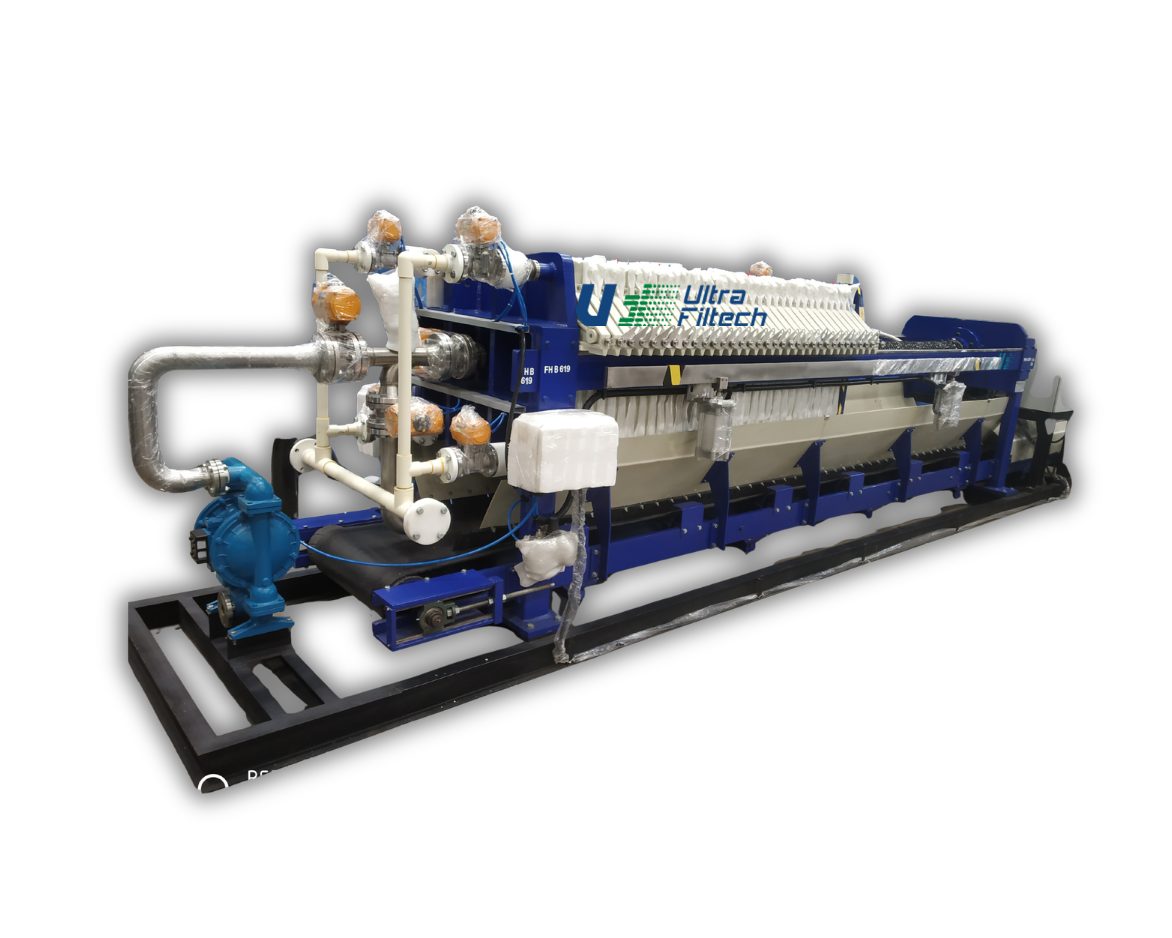
A filter press works by applying pressure to sludge and forcing the liquid phase through a filter medium while retaining the solid material inside chambers formed by plates.
As the cycle continues, solids accumulate and form a cake. Over time, this cake becomes denser, and more water is separated from the sludge.
What makes Sludge Dewatering Using Filter Press especially effective is the combination of pressure, filtration area, and controlled cycle operation. This allows plants to handle a wide variety of sludge types with consistent results.
How the Process Works in Real Plant Conditions
In a typical setup, conditioned sludge is pumped into the filter press chambers. The liquid passes through the filter cloth and exits as filtrate, while solids remain trapped inside.
As more solids build up, the filter cake thickens. Once the chambers are full and the desired dewatering level is reached, the press is opened and the cake is discharged.
Depending on the sludge characteristics and the type of filter press used, the final cake can be significantly drier than what is achieved through simpler dewatering methods.
This is one of the key reasons Sludge Dewatering Using Filter Press is widely used in both municipal and industrial applications.
Different Types of Sludge Require Different Approaches
Not all sludge behaves the same way. This is one of the first realities that plant operators discover.
Some sludge types are relatively easy to dewater. Others are sticky, fibrous, compressible, or loaded with fine particles that make filtration slower and more difficult.
Common examples include:
- Biological sludge from wastewater treatment
- Chemical sludge from industrial processes
- Paint and pigment sludge
- Metal hydroxide sludge
- Food processing sludge
Because of this variation, successful Sludge Dewatering Using Filter Press depends heavily on understanding the sludge itself, not just selecting equipment based on capacity.
Conditioning Plays a Major Role
One of the most overlooked aspects of sludge dewatering is conditioning. In many cases, sludge needs to be treated with polymers or coagulants before entering the filter press.
This improves particle agglomeration and helps the solids separate more effectively from the liquid phase.
Without proper conditioning, even a high-quality filter press may struggle to deliver good results. The sludge may blind the cloth, form weak cake, or retain too much moisture.
Plants that achieve the best results with Sludge Dewatering Using Filter Press usually treat conditioning as part of the process, not a secondary step.
Why Cake Dryness Has Such a Big Impact
Cake dryness is not just a performance metric on paper. It affects real operating costs every day.
Drier cake means:
- Lower transportation weight
- Reduced disposal fees
- Easier handling and storage
- Less odor and mess in many cases
- Better potential for further processing or reuse
This is one of the strongest economic advantages of Sludge Dewatering Using Filter Press, especially for facilities where sludge disposal is a major expense.
Filter Press vs Other Dewatering Methods
There are several sludge dewatering technologies available, including centrifuges, belt presses, and screw presses. Each has its place, and no system is ideal for every plant.
However, filter presses are often preferred when the goal is maximum cake dryness and strong solid-liquid separation.
Compared to some other systems, Sludge Dewatering Using Filter Press typically offers:
- Better final solids content
- Lower cake moisture
- Cleaner filtrate in many applications
- More defined batch control
The tradeoff is that filter presses are usually batch-operated rather than continuous. For many plants, that is a worthwhile compromise.
Real-World Example: Cost Reduction Through Better Dewatering
Consider an industrial wastewater treatment plant generating sludge with high moisture content. Initially, they rely on a basic dewatering method that leaves the sludge too wet for economical disposal.
After shifting to a properly sized filter press and improving conditioning, the plant sees a major reduction in sludge volume and transport frequency.
The equipment does not just improve dryness. It changes the economics of the entire waste handling process.
This is where Sludge Dewatering Using Filter Press becomes more than a filtration step. It becomes an operational cost-saving strategy.
Common Mistakes That Affect Dewatering Performance
There are a few recurring issues that often reduce performance:
- Poor sludge conditioning
- Incorrect cycle time
- Wrong filter cloth selection
- Underestimating sludge variability
- Using equipment not suited to actual sludge characteristics
These are not unusual mistakes, but they can lead to slower cycles, wetter cake, and higher maintenance.
Plants that approach Sludge Dewatering Using Filter Press thoughtfully usually avoid these problems and get far better long-term results.
When a Filter Press Makes the Most Sense
A filter press is often the right choice when:
- Disposal cost depends on sludge moisture
- The plant wants better solids recovery
- Cake dryness is important
- Batch processing is acceptable
- Sludge volume justifies the investment
In these cases, the benefits are not only technical. They are financial and operational as well.
Final Thoughts
Sludge Dewatering Using Filter Press remains one of the most reliable and cost-effective approaches for reducing sludge volume and improving waste handling efficiency. It offers plants a practical way to turn a difficult, expensive byproduct into something easier to manage and less costly to dispose of.
When selected and operated correctly, a filter press does much more than separate water from sludge. It supports cleaner operations, lower disposal costs, and better long-term process control.
For industries and treatment facilities dealing with sludge every day, that kind of reliability is not optional. It is essential.